
Is Aveli safe? 1 Proven Solution
Understanding Cellulite Treatment Safety
Is Aveli safe? For those considering this cellulite treatment, understanding its safety is a top priority. Aveli is an FDA-cleared, minimally invasive procedure designed to treat cellulite by releasing the fibrous bands beneath the skin that cause dimpling. According to clinical studies, it has a documented safety profile with common side effects being mild and temporary, such as bruising and swelling that typically resolve within a week. Data from these studies show a mean patient-reported pain rating of 3.8 out of 10 in the 24 hours following the procedure, with serious complications reported as rare.
Quick Safety Summary:
- FDA Status: FDA-cleared in October 2021 for cellulite treatment
- Common Side Effects: Temporary bruising, mild swelling, tenderness (resolves within days to a week)
- Success Rate: About 80% of patients showed significant improvement at 3 months
- Pain Level: Self-reported mean of 3.8/10 for 24 hours post-procedure
- Serious Complications: Rare when performed by qualified providers
- Recovery: Minimal downtime, most resume activities quickly
If you’re one of the estimated 80-90% of women who deal with cellulite, you’ve probably felt frustrated by treatments that promise results but don’t deliver. Cellulite isn’t about weight or fitness—it’s a structural issue caused by fibrous bands pulling down on your skin while fat pushes up, creating those familiar dimples on your thighs and buttocks.
Aveli represents a modern approach that targets this root cause. In contrast to topical creams or surface-level treatments, Aveli uses a specialized device inserted under the skin to identify and release the specific fibrous bands in real time. The procedure is typically performed under local anesthesia in about an hour, and clinical studies have documented results lasting at least 12 months.
As Daniel J Farrugia MD, PhD, FACS, a board-certified surgeon who specializes in minimally invasive awake body contouring procedures at BodyLuxe in Chicago, I understand the importance of safety when evaluating any cosmetic treatment, including answering the question “Is Aveli safe?” for patients considering cellulite reduction. While I don’t personally perform Aveli at my practice, I recognize the value of evidence-based, FDA-cleared technologies that give patients real options with minimal downtime.
This guide will walk you through everything you need to know about Aveli’s safety profile, from clinical data and potential side effects to what makes a provider qualified, so you can make an informed decision about whether this treatment is right for you.
What is Aveli and How Does It Work?
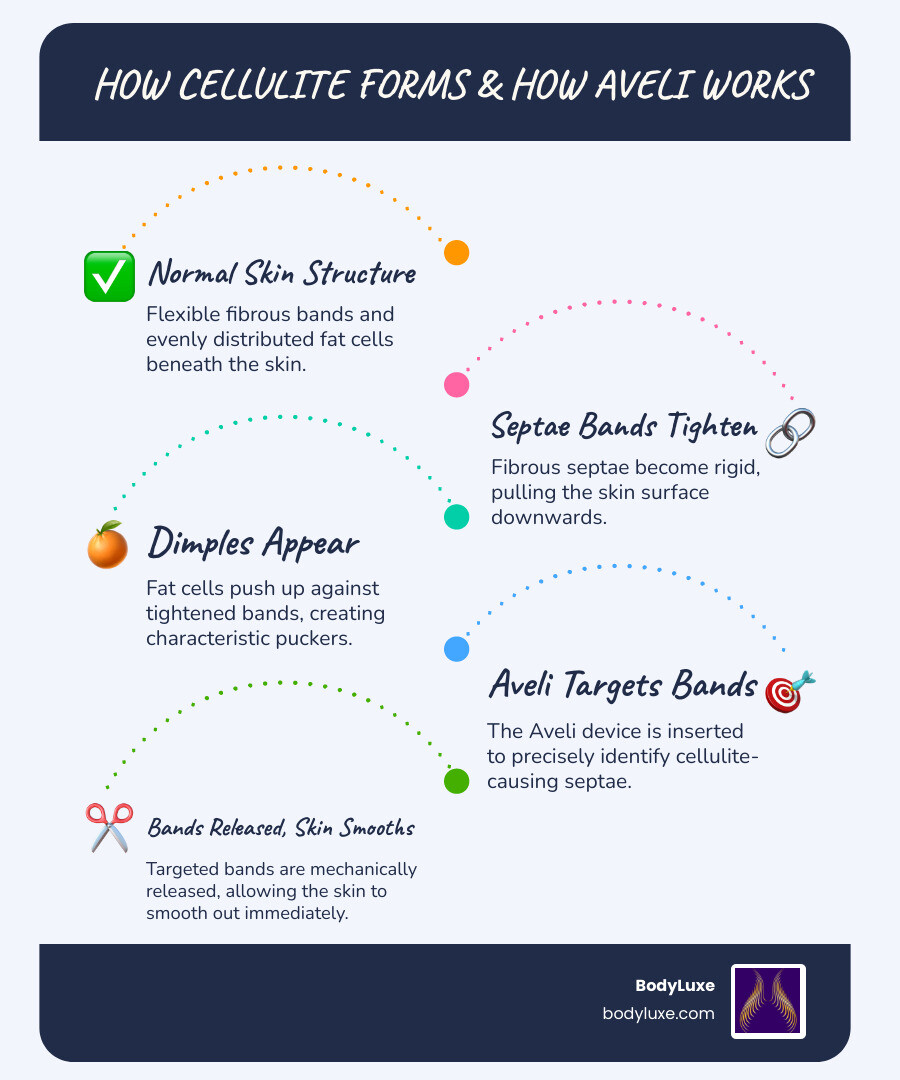
Cellulite has been a cosmetic concern for ages, frustrating many of us who diligently work out and eat well, only to find those stubborn dimples persist. The truth is, cellulite isn’t primarily about fat or lack of exercise; it’s a structural issue beneath the skin. Imagine your skin as a mattress, and the fat cells as the stuffing. Fibrous connective tissue bands, called septae, act like the tufts that pull down on the mattress cover. When these bands become tight or inflexible, they pull the skin downward, while the surrounding fat pushes upward, creating that characteristic puckered, dimpled appearance we know as cellulite. It’s often most visible on the thighs and buttocks, but can appear elsewhere too.
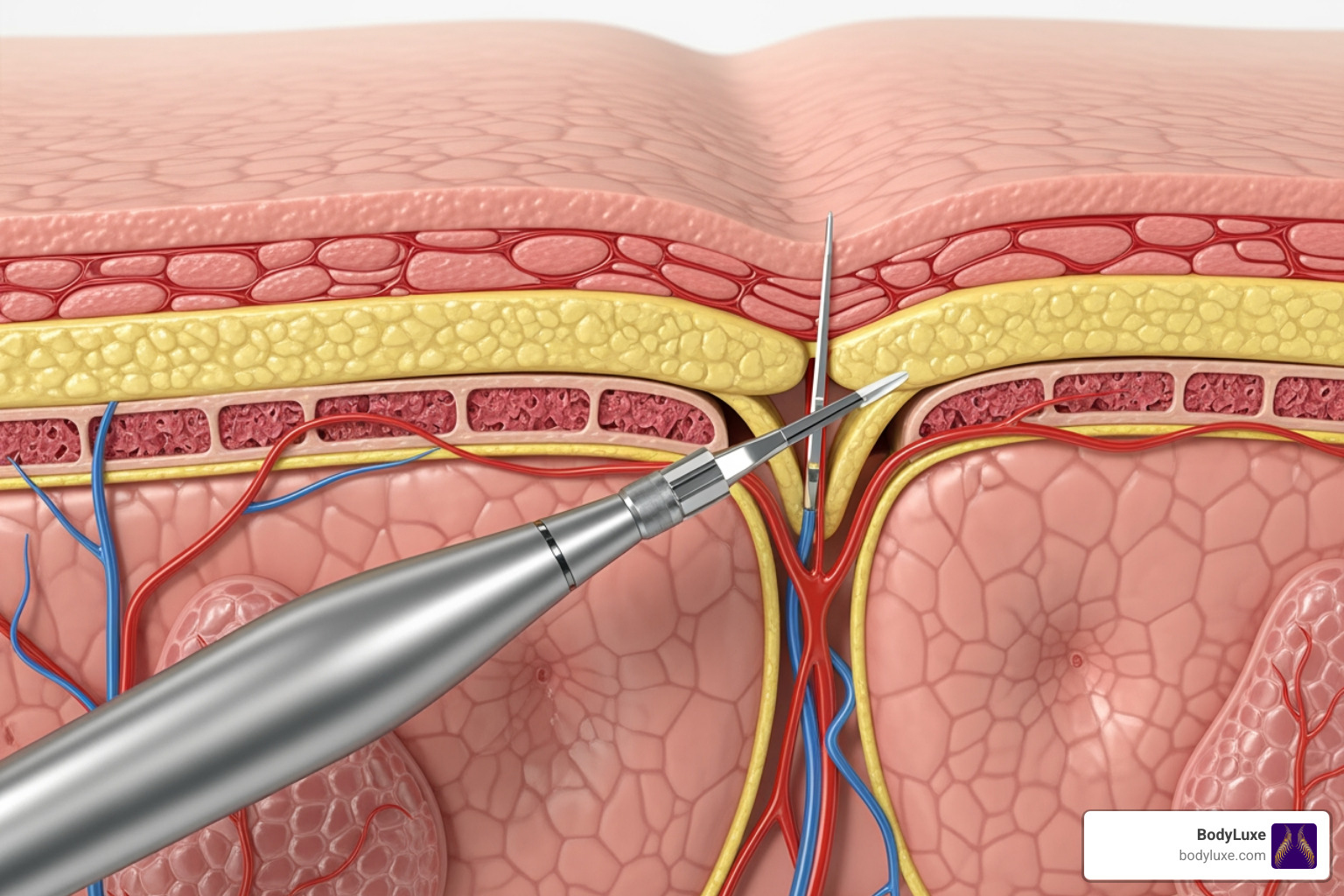
Aveli is a minimally invasive treatment designed to address this structural root cause. It uses a specialized, handheld device that a provider inserts just beneath the skin through a tiny incision. The device is designed to allow for the targeting of specific fibrous septae bands responsible for cellulite dimples.
Here’s how it works: The Aveli device uses a combination of light and a retractable blade. The provider guides the device under the skin, and the light component helps visualize and confirm which bands need to be released. Once a band is identified, the retractable blade, which forms a hook shape, is used to sever the tight septae. This mechanical release allows the skin to rebound and smooth out, reducing the appearance of dimples.
The entire procedure is performed under local anesthesia to ensure patient comfort. By targeting the problem at its source, Aveli offers a direct approach to cellulite reduction.
Ready to learn more about advanced skin smoothing options? Explore our range of Non-Invasive Procedures.
Is Aveli Safe? Understanding FDA Clearance and Potential Side Effects
The question, “Is Aveli safe?” is a crucial one. Aveli has received FDA 510(k) clearance, which is a key point for patients to consider. It received this clearance in October 2021. “FDA-cleared” signifies that the device has been reviewed by the U.S. Food and Drug Administration and found to be substantially equivalent to another legally marketed device. While this is different from “FDA-approved” (a more rigorous process for new drugs or high-risk devices), it means the device has undergone a review for safety and performance. You can review the specifics of its clearance through the FDA 510(k) clearance details.
The minimally invasive nature of Aveli is a factor in its safety profile. Unlike some surgical methods, Aveli involves small incisions and local anesthesia, which reduces the risks associated with general anesthesia. Patients in clinical studies reported a mean pain rating of 3.8 out of 10 for the 24 hours after the procedure. However, like any medical procedure, safety is paramount, and the expertise of the provider plays a significant role. When Aveli is performed by a qualified and experienced professional, risks can be minimized and outcomes optimized. At BodyLuxe, we prioritize patient well-being, ensuring every step of any procedure is handled with the highest standards of care.
Considering enhancing your body contours? Learn more about your options for Body Contouring.
Is Aveli Safe to Undergo? A Look at the Clinical Data
Clinical data on Aveli treatment provides insight into its safety and effectiveness. Studies published in journals like the Aesthetic Surgery Journal have presented evidence on the procedure. You can find more details on Clinical research on Aveli’s efficacy. These studies assessed outcomes at 90 days and 12 months, showing a clinically significant reduction in cellulite that was maintained for at least a year.
One statistic from these studies is the reported success rate. Approximately 80% of the 74 subjects treated showed significant improvement three months post-treatment, as determined by three independent physicians who conducted a blind review of patient imagery. This type of external validation is a standard part of clinical research.
Furthermore, the studies reported low complication rates, indicating that serious complications are rare when the procedure is performed correctly. While no procedure is entirely without risk, Aveli’s data suggests it is a viable option for addressing cellulite. Patient satisfaction in studies is often correlated with aesthetic improvements, manageable recovery, and minimal discomfort.
What Are the Common Side Effects of Aveli?
While Aveli is generally considered safe, it’s important to be aware of the potential, typically mild, side effects. These are common with most minimally invasive procedures and are usually temporary.
The most frequently reported side effects include:
- Bruising: This is perhaps the most common side effect, often appearing at the treatment sites. The extent can vary, but it usually resolves within a couple of weeks. Some individuals, as noted in personal accounts, might experience discoloration that lingers slightly longer, sometimes for up to nine weeks, particularly in areas with more severe cellulite. Arnica pills, which some research suggests may help relieve bruising and post-bruise skin staining, can be considered to aid this process, though your provider will offer custom advice.
- Swelling: Mild swelling in the treated areas is normal and typically subsides within a few days to a week.
- Tenderness: The treated areas may feel tender or sore for a few days post-procedure, usually resolving within the first week. The self-reported pain rating of 3.8 out of 10 within 24 hours post-procedure indicates that while there’s some discomfort, it’s generally manageable.
These effects usually resolve within a week, though some bruising or discoloration might take a bit longer to fully fade. Serious complications are rare, making Aveli a safe and effective option for most patients. We always provide comprehensive aftercare instructions to help manage these side effects and ensure a smooth recovery.
For more information on what to expect during and after cosmetic procedures, check out our guide on Recovery After Surgery.
Your Aveli Journey: Candidacy, Recovery, and Results
Starting on any cosmetic treatment is a journey, and for those considering Aveli, it’s important to understand the process from start to finish. From determining candidacy to knowing what recovery entails and the expected duration of results, this information can help guide your decision.
The Aveli procedure itself is typically completed in about an hour, depending on the number of areas being treated. During this time, you’ll be comfortable under local anesthesia, and our focus will be on precisely addressing your cellulite concerns.
Who is a Good Candidate for Aveli Treatment?
While many individuals desire smoother skin, Aveli is particularly effective for certain candidates. We look for specific characteristics to ensure you achieve the best possible results:
- Dimpled Cellulite: Aveli is designed specifically for dimpled cellulite, which is caused by those tight fibrous septae bands. If your cellulite presents as distinct indentations, you’re likely a good candidate. It’s less effective for “rolling” or “wavy” fat, which is a different type of contour irregularity.
- Location: The treatment is cleared for use on the buttocks and thighs, which are the most common areas for cellulite dimpling.
- Good Skin Elasticity: Ideal candidates generally have good skin elasticity. While Aveli addresses the structural cause of dimpling, it does not treat skin laxity or excess fat. If you have significant loose skin, especially due to massive weight loss, Aveli alone might not be the most comprehensive solution for you.
- Healthy Individuals: As with any medical procedure, you should be in good general health. Aveli was tested on women aged 21 to 55, but candidacy is determined on an individual basis during a personalized consultation.
It’s important to us that we set realistic expectations and ensure Aveli is the right fit for your unique needs. That’s why a thorough Consultation is always the first step.
What is the Recovery Process Like?
One of the notable aspects of Aveli is its minimal downtime, allowing most patients to return to their regular activities fairly quickly. The procedure itself typically takes about an hour, making it convenient for busy schedules.
Here’s what you can generally expect during your recovery:
- Immediate Post-Procedure: Most patients experience mild soreness, swelling, and bruising following the procedure. The tenderness usually lasts for the first three days.
- Compression Garments: You’ll likely be advised to wear a compression garment for more than a week. This helps to reduce swelling and bruising and supports the healing process. While some patients find medical-grade compression garments uncomfortable, alternatives like Spanx or compression yoga pants may be approved by your provider. These can still be challenging to put on and take off over tender areas during the initial healing phase.
- Activity Restrictions: We recommend avoiding strenuous exercise for a short period after your treatment. Your provider will give you specific guidelines, but typically, light activities can be resumed relatively quickly.
- Managing Bruising: While bruising and swelling mostly subside within the first couple of weeks, some discoloration, especially with deeper dimples, might linger longer. One personal account noted bruising that took up to nine weeks to lighten completely. Don’t worry, we’ll provide you with all the necessary Aftercare tips and support to ensure a comfortable and effective healing process.
How Long Do Aveli Results Last?
Patients may notice an improvement in their skin’s appearance soon after Aveli treatment. The final results will become more apparent over several weeks as any swelling subsides and your body adapts.
A key consideration for any treatment is the longevity of its results. Because Aveli directly addresses the structural cause of cellulite by releasing the fibrous septae bands, the results are intended to be long-lasting. In studies published in the Aesthetic Surgery Journal, effects were assessed at 90 days and then again at 12 months, showing that a clinically significant reduction in cellulite was maintained for a year. You can review the 12-month study data for more details.
While current data confirms results for at least 12 months, some providers have anecdotally reported seeing no recurrences in their patients for longer periods. Maintaining a healthy lifestyle, including a balanced diet and regular exercise, can help support and prolong cosmetic results.
Practical Considerations for Aveli Treatment
When considering Aveli, it’s natural to have questions about how it compares to other options, what the investment looks like, and if it can be part of a broader aesthetic plan. We’re here to provide practical insights to help you make informed decisions.
How Does Aveli Compare to Other Cellulite Reduction Methods?
The landscape of cellulite treatments includes various technologies. Aveli is distinguished by its mechanism of action and approach.
- Targeting: Unlike some methods that rely on surface treatments or less direct approaches, Aveli uses a device that allows providers to identify and manually release specific septae bands causing dimples, with real-time visual confirmation.
- Mechanical Release: Aveli mechanically severs the fibrous bands. This is different from methods that use energy (like lasers or radiofrequency) or injections to disrupt these bands. By physically cutting the septae, the treatment directly addresses the tension that causes dimpling.
- Treatment Session: For many patients, improvement can be achieved in a single Aveli treatment session, which can be a convenient option compared to methods requiring multiple sessions.
- Focus on Structure: Aveli’s approach is to target the structural root cause of cellulite—the fibrous bands. This is intended to produce noticeable and lasting results, compared to treatments that primarily focus on fat reduction or skin tightening without addressing the underlying septae.
While Aveli is an option for cellulite, it’s just one piece of the puzzle in achieving your aesthetic goals. Explore our range of Surgical Procedures to see how different treatments might fit into a more comprehensive plan.
What is the Typical Cost of Aveli?
Understanding the financial investment is a key part of your decision-making process. The cost of Aveli treatment can vary, typically ranging from $4,000 to $6,000. This range is influenced by several factors:
- Provider Variance: The experience and expertise of the provider performing the treatment can affect the cost. Highly skilled and board-certified surgeons often reflect their specialized training in their pricing.
- Geographic Location: Costs can differ based on the region. In Chicago, prices will reflect the local market for specialized cosmetic procedures.
- Treatment Area: The extent of your cellulite and the number of areas requiring treatment will also play a role in the final price. More extensive treatment areas may incur higher costs.
We understand that cost is a significant consideration, and we encourage you to schedule a personalized consultation to receive an accurate, detailed quote custom to your specific needs and goals. We also work with various financing options to make your treatment more accessible. You can explore options for Payment & Financing to help plan your investment in smoother skin.
Can Aveli Be Combined with Other Cosmetic Procedures?
Yes, Aveli can be performed as a standalone treatment for cellulite, or it can be combined with other cosmetic procedures to achieve more comprehensive body contouring results.
Combining treatments allows a provider to address multiple concerns simultaneously or sequentially. For instance:
- Liposuction: If a patient has localized pockets of unwanted fat in addition to cellulite, liposuction can remove the fat, while Aveli can then address the dimpling for a smoother, more sculpted appearance.
- Fat Transfer: In some cases, minor contour irregularities or a desire for improved volume can be addressed with fat transfer. This involves taking fat from one area of your body (often via liposuction) and strategically injecting it into another, such as for a Brazilian Butt Lift or to fill subtle depressions, creating a more harmonious silhouette.
During your consultation, a provider can discuss your aesthetic goals in detail and help you determine if combining Aveli with other procedures is the best approach to achieve the desired results.
Why Choosing a Qualified Provider is Crucial for Aveli Safety
When it comes to any cosmetic procedure, especially one that involves working beneath the skin, the choice of your provider is paramount. This isn’t just about getting good results; it’s fundamentally about your safety and well-being.
At BodyLuxe, we emphasize that Aveli treatment, while minimally invasive, should always be performed by a highly credentialed, board-certified surgeon. Our practice is strategically focused on a premium, safety-first, evidence-based approach, ensuring that every procedure is performed by an expert. This commitment is why choosing a concierge surgeon-owned practice like ours in Chicago is often the best choice. You can learn more about our philosophy and why we stand out in Chicago by reading Why Choosing a Concierge Surgeon-Owned Practice Like BodyLuxe Is the Best Choice in Chicago.
A board-certified surgeon brings extensive training, in-depth anatomical knowledge, and a wealth of experience to the table. They understand not only the aesthetic goals but also the underlying physiology, which is critical for safe and effective treatment. Their experience with Aveli, or similar minimally invasive techniques, ensures that they can handle the device precisely and address any unforeseen circumstances with expertise. Patient safety is always our top priority, guiding every decision and action we take. This expertise also allows for personalized care, tailoring the treatment to your unique anatomy and goals, leading to more natural and proportionate results.
Why a Qualified Provider is Essential for Ensuring Aveli is Safe
A qualified provider is not just a nice-to-have; they are essential for ensuring that Aveli is safe and that you achieve optimal outcomes. Here’s why:
- Minimizing Risks: Even with a minimally invasive procedure, there are inherent risks. An experienced surgeon knows how to identify potential contraindications, avoid critical structures, and perform the procedure with the utmost care, significantly reducing the chances of complications. They understand the nuances of the Aveli device and its application.
- Proper Technique: The precision of Aveli relies on the skill of the operator. A qualified provider will have undergone specific training in using the Aveli device and will apply the correct technique to accurately identify and sever the fibrous bands without causing unnecessary trauma to surrounding tissues. This precision is key to both safety and efficacy.
- Managing Side Effects: While side effects like bruising and swelling are typically mild, a qualified provider is adept at managing these effectively and providing comprehensive post-care instructions. They can also quickly identify and address any unusual or persistent side effects, ensuring your recovery remains on track.
- Anatomical Knowledge: A deep understanding of anatomy is crucial for working beneath the skin. A board-certified surgeon possesses this knowledge, allowing them to steer the treatment area safely and effectively, avoiding nerves, blood vessels, and other important structures.
- Achieving Optimal Outcomes: Beyond safety, a skilled provider is essential for delivering the best possible aesthetic results. They have an artistic eye combined with technical expertise to create smoother, more natural-looking contours that align with your expectations.
What Questions Should I Ask During My Consultation?
We believe in empowering our patients with information. Your consultation is a two-way street, where you can ask all your questions and feel completely comfortable with your chosen provider. Here are some key questions we recommend asking:
- What is your specific experience with Aveli treatment? How many procedures have you performed?
- Can I see before-and-after photos of your previous Aveli patients?
- Based on my individual case, what are the expected results I can realistically achieve with Aveli?
- What are the specific details of the recovery process I should expect, including activity restrictions and aftercare?
- Can you provide a detailed breakdown of the total cost, including all associated fees?
- Are there any alternative treatments you would recommend for my specific type of cellulite or body goals?
- What measures do you have in place to ensure patient comfort and safety during and after the procedure?
Asking these questions will not only help you gauge the provider’s expertise but also ensure that you feel confident and informed about your decision.
Conclusion
So, is Aveli safe? Based on its FDA clearance and available clinical data, Aveli is presented as a safe and effective option for individuals looking to reduce cellulite appearance. The procedure targets the structural cause of cellulite, offering the potential for long-lasting results with minimal downtime and manageable side effects. As with any procedure, the outcome is highly dependent on the expertise of the provider.
At BodyLuxe in Chicago, while we do not offer Aveli, we champion the importance of evidence-based, patient-centered care for all body contouring procedures. We believe in providing you with the information needed to make an informed decision for your body and your goals. Your safety, comfort, and satisfaction are at the forefront of our philosophy. When considering any aesthetic treatment, we recommend prioritizing a qualified, board-certified surgeon who can offer personalized care and ensure your peace of mind.
If you’re curious about other ways to achieve your aesthetic goals and explore solutions for your body, we invite you to find our range of services.