
Why local anesthesia? #1 Guide to Pain-Free 2025
Why Local Anesthesia Matters for Modern Body Contouring
Why local anesthesia? Because it allows you to stay awake, alert, and in control during your procedure while eliminating pain—no general anesthesia required. Here’s what makes local anesthesia a game-changer for cosmetic surgery:
- You remain conscious and aware throughout the entire procedure
- Faster recovery time with most patients returning to normal activities within days
- Significantly fewer side effects compared to general anesthesia—no nausea, no grogginess
- Lower overall costs by eliminating anesthesiologist fees and facility charges
- Improved safety profile with rare and typically minor complications
- Same-day discharge with no overnight hospital stay needed
Today, many types of surgery can be safely and painlessly performed while you are awake. Local anesthesia has transformed body contouring procedures like liposuction and Brazilian Butt Lift (BBL) from major surgical events requiring general anesthesia into streamlined outpatient procedures that respect your time, your safety, and your desire to be an active participant in your care.
The numbers tell the story: local anesthetics can last from 30 minutes to 12 hours or more, side effects are rare and usually minor, and you’ll typically feel residual numbness for two to four hours after your procedure—enough time to get home comfortably and begin your recovery in familiar surroundings.
I’m Dr. Daniel J. Farrugia, MD, PhD, FACS, a board-certified surgeon who has performed several thousand awake body-contouring procedures using local anesthesia at BodyLuxe in Chicago, and I’ve seen why local anesthesia has become the preferred choice for patients seeking natural-looking results with minimal downtime. Understanding why local anesthesia works—and why it might be the right choice for you—starts with knowing exactly how it blocks pain while keeping you safe, comfortable, and in control.
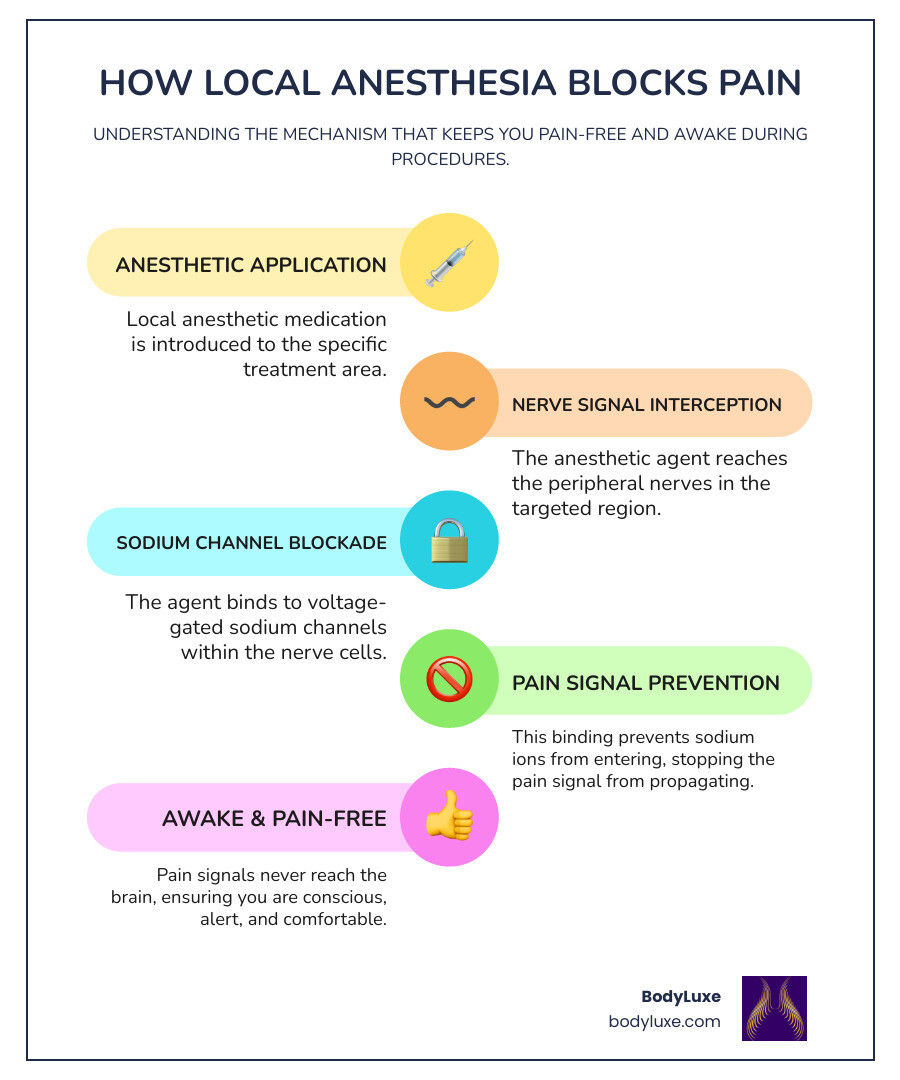
What is Local Anesthesia and How Does It Work?
Local anesthesia is a medication that temporarily numbs a specific, small area of your body, allowing us to perform procedures without you feeling any pain in the treated region. Unlike general anesthesia, which induces unconsciousness, local anesthesia ensures you remain fully awake and aware throughout your procedure.
So, how does it work its magic? Local anesthetics function by temporarily blocking your peripheral nerves from sending pain and sensory signals to your brain. Imagine your nerves as tiny electrical wires carrying messages. When we introduce a local anesthetic, it essentially puts a temporary “stop sign” on these wires. More precisely, these medications selectively block voltage-gated sodium channels within the nerve cells. By inhibiting the influx of sodium ions, the nerve impulse—the pain signal—cannot propagate, preventing it from ever reaching your brain.
This process results in a reversible numbness. You might still feel some pressure or movement in the treated area, but the pain signals are effectively silenced. The beauty of local anesthesia is that it achieves precise pain control without affecting your central nervous system or your consciousness. You’re simply numb in the area we’re working on, while the rest of your body, and your mind, remain unaffected. Scientific research continues to deepen our understanding of these anesthetic mechanisms, confirming their efficacy and safety.
The duration of this numbing effect can vary significantly depending on the specific anesthetic agent used, the dose, and the area treated. Generally, the numbness from local anesthesia will last from 30 minutes to 12 hours or more. For many procedures, you can expect this numbness to last for two to four hours, providing ample time for the procedure and initial recovery before sensation gradually returns.
The Different Types and Forms of Anesthetics
Local anesthetics come in various forms, each suited for different applications. This versatility is one of the key reasons why local anesthesia is so widely used in modern medicine.
- Topical Anesthetics: These are applied directly to the skin or mucous membranes to numb the surface. Common examples include:
- Creams: Often used to prepare the skin before injections or minor skin procedures.
- Gels: Frequently found in dental settings or for conditions like mouth ulcers.
- Sprays: Can be used to numb the throat before an endoscopy or to alleviate sore throats.
- Ointments and Skin patches: Provide localized relief for various painful conditions. Some medications containing mild local anesthetics, like cold sore gels, are also available over-the-counter.
- Injectable Anesthetics: These are administered via injection directly into the tissue around the area to be treated or near the nerves supplying that area. This is the primary method we use for awake body contouring procedures.
- Regional Anesthesia: While sometimes considered a separate category, regional anesthesia is essentially a broader application of local anesthetics, numbing a larger part of the body.
- Nerve Blocks: Involve injecting local anesthetic near specific nerves or bundles of nerves to numb an entire limb or region. For example, a peripheral nerve block might be used for an arm or leg operation.
- Epidural and Spinal Anesthesia: These are injected into the lower back to numb areas from the waist down, commonly used for childbirth or certain major surgeries.
Among the common agents, Lidocaine is often considered the gold standard due to its rapid onset and moderate duration. Bupivacaine is another popular choice, known for its longer-lasting effects. The selection of the anesthetic agent and its form depends entirely on the specific procedure, its duration, and your individual needs.
A Brief History of Numbing
The quest to alleviate pain during medical procedures is as old as medicine itself. For centuries, various natural substances were used to dull sensation. Ancient Incas, for example, chewed coca leaves to numb pain, a practice that eventually led to the findy of cocaine.
Cocaine played a pivotal, albeit controversial, role in the early development of local anesthesia. In the late 19th century, scientists recognized its potent numbing properties. Ophthalmologist Carl Koller famously demonstrated cocaine’s effectiveness as a topical anesthetic for eye surgery in 1884. This groundbreaking findy paved the way for safer, synthetic alternatives.
The early 20th century saw the development of Novocain (procaine), a synthetic compound that offered similar numbing effects to cocaine but without its addictive properties. Novocain dominated the field for decades, particularly in dentistry. However, modern anesthetics have since surpassed Novocain in terms of efficacy, safety, and duration. Today, Lidocaine is widely preferred by modern dentists and surgeons alike, offering a safer and more effective option. The evolution of local anesthesia is a testament to continuous medical innovation, driven by the desire to improve patient comfort and safety. You can learn more about the fascinating history of local anesthesia.
The Big Question: Why Local Anesthesia?
When considering any medical procedure, especially cosmetic surgery, one of the first questions you might ask is about pain management. Why local anesthesia? For many of our patients in Chicago, the answer lies in a powerful combination of safety, comfort, and efficiency. At BodyLuxe, we specialize in awake body contouring procedures like liposuction and Brazilian Butt Lift (BBL) precisely because local anesthesia offers distinct advantages that align with our premium, safety-first approach.
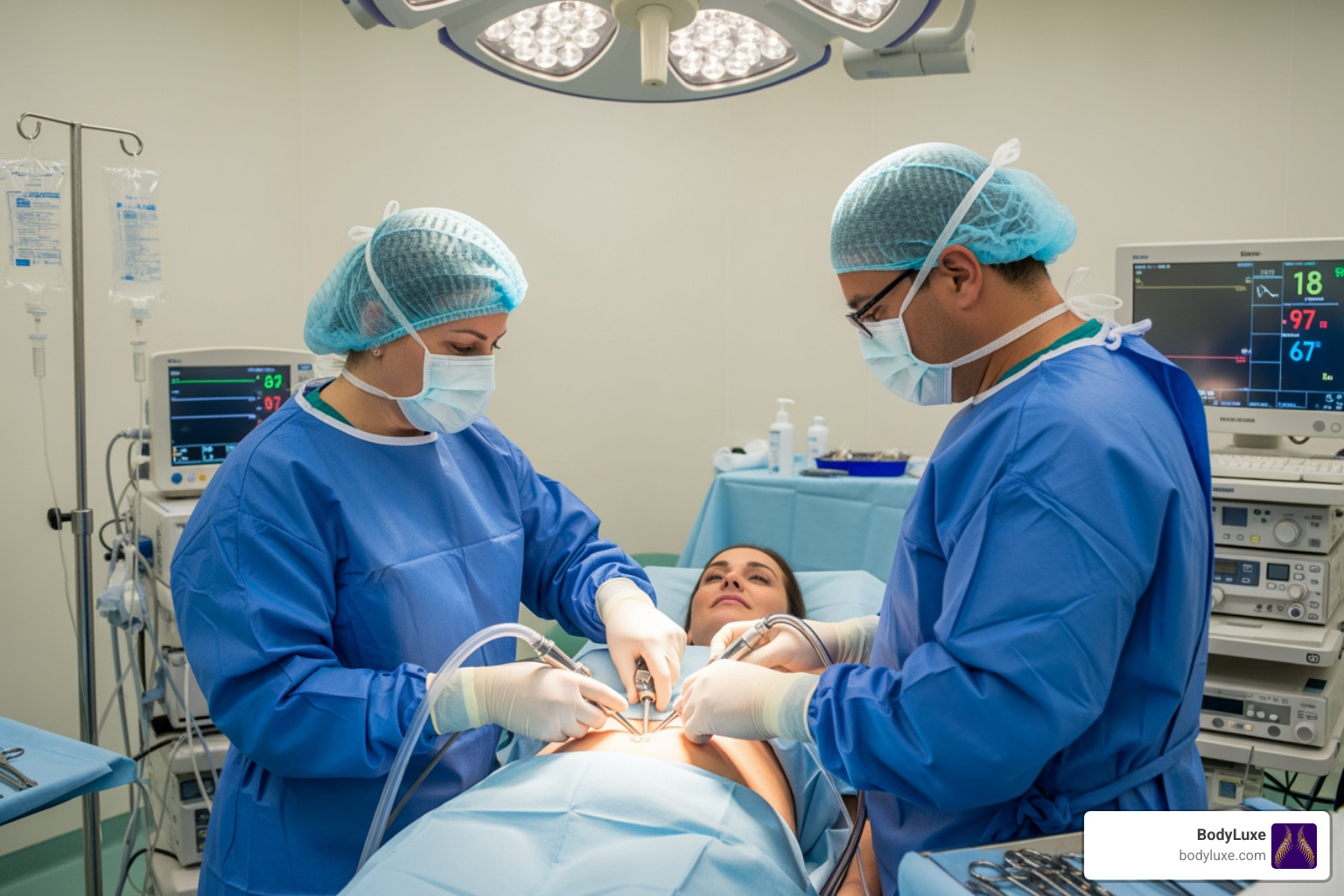
Local anesthesia empowers patient choice. It allows you to remain conscious and engaged throughout your procedure, which can be incredibly reassuring. You can communicate with your surgeon, listen to music, or simply relax, all while knowing that you are in control and pain-free. This level of awareness contrasts sharply with general anesthesia, where you are completely unconscious.
The safety profile of local anesthesia is a significant draw. Compared to general anesthesia, local anesthesia generally has fewer and less severe side effects and complications. This reduced risk makes it an exceptionally appealing option for a wide range of procedures, including body contouring. It means less worry for you and a smoother experience overall.
For procedures like awake liposuction, local anesthesia allows for many surgical procedures to be performed quickly, with less preparation, and with shorter recovery times. This efficiency not only benefits your schedule but also contributes to a more comfortable and manageable post-operative period.
The Key Advantages: Why Local Anesthesia is Often Preferred
The benefits of local anesthesia extend far beyond simply numbing an area. When weighed against other types of anesthesia, such as general anesthesia or sedation, the advantages become clear.
Here’s a quick comparison:
| Feature | Local Anesthesia | General Anesthesia |
|---|---|---|
| Consciousness | Awake and alert, in control | Unconscious, no awareness |
| Recovery Time | Faster, often hours | Slower, can be days |
| Side Effects | Rare and usually minor (soreness, bruising) | More common (nausea, grogginess, sore throat) |
| Risks | Lower; systemic toxicity is rare | Higher; aspiration, respiratory issues |
| Cost | Potentially lower, no anesthesiologist fees | Higher, includes anesthesiologist and facility |
| Preparation | Minimal, often no fasting required | Extensive, strict fasting rules |
| Monitoring | Monitored by surgeon and support staff | Intensive monitoring by anesthesiologist |
One of the most appreciated benefits is the significant reduction in side effects. General anesthesia and sedation can often lead to unpleasant issues like nausea, vomiting, and a prolonged feeling of grogginess. With local anesthesia, these are largely avoided, contributing to a much more comfortable recovery experience. Our patients frequently tell us how much they appreciate not feeling sick after their procedure.
Furthermore, procedures performed under local anesthesia, particularly in body contouring, often involve the use of vasoconstrictors (like epinephrine) mixed with the anesthetic. This combination helps to constrict blood vessels in the treated area, which in turn reduces bleeding and bruising during and after the procedure. This not only improves safety but also contributes to better aesthetic results and a smoother recovery.
Patient comfort and awareness are paramount to us. While you won’t feel pain, you remain awake and can communicate any needs or concerns to our team. This active participation can alleviate anxiety and make the entire experience more positive. This is especially true for procedures like a BBL Without the Risks, where patient comfort and safety are our top priorities.
Faster Recovery and Lower Costs: Why Local Anesthesia is a Smart Choice
In today’s world, efficiency and value are highly prized, and medical procedures are no exception. This is another compelling answer to why local anesthesia is often the preferred method, particularly for elective cosmetic procedures.
Local anesthetics allow healthcare providers to do many surgical procedures with less preparation and shorter recovery times. This means your time in our Chicago clinic is focused on your procedure, not on extensive pre-operative protocols. The procedure time itself can be shorter, and because you avoid the systemic effects of general anesthesia, you won’t need hours in a recovery room to “wake up” or clear your system of powerful sedatives.
For most of our awake body contouring procedures, you’ll be able to go home the same day—no overnight hospital stay required. This significantly reduces the disruption to your daily life, allowing for a quicker return to your normal activities, often within days. We provide detailed guidance for your Awake BBL Recovery to ensure you’re comfortable and healing well at home.
Beyond convenience, local anesthesia can also contribute to lower overall costs. Eliminating the need for a dedicated anesthesiologist (a medical doctor who must monitor patients if administered general anesthesia or sedation) and reducing facility fees associated with extended recovery periods can make your procedure more affordable. This cost-effectiveness, combined with the other benefits, makes local anesthesia a smart choice for many patients seeking high-quality body contouring results.
What to Expect: Your Journey with Local Anesthesia
Understanding what to expect before, during, and after your procedure under local anesthesia can help you feel more comfortable and confident. Our goal at BodyLuxe is to make your journey as smooth and reassuring as possible.
We prioritize clear communication with your surgeon and medical team throughout the entire process. While you will be awake and alert, and you won’t feel pain in the area being treated, you may feel some pressure or movement. This is completely normal and expected, as local anesthesia targets pain signals specifically, not tactile sensations. We encourage you to ask any questions you have during your consultation, ensuring you feel fully prepared and informed.
Before the Procedure
Your journey begins with a thorough consultation. This is our opportunity to understand your aesthetic goals, review your medical history, and determine if local anesthesia is the safest and most effective option for you.
- Medical History Review: We’ll discuss your health, medications, and any past experiences with anesthesia. It’s crucial to disclose all medications, supplements, and any recreational substances you use. For example, some weight loss drugs like semaglutides can slow digestion, increasing the risk of aspiration if general anesthesia were used, highlighting the safety advantage of local anesthesia in such cases.
- Allergy Disclosure: We’ll specifically ask about any known allergies, especially to local anesthetic agents or their components. True allergic reactions to amide local anesthetics are rare, but it’s vital we have this information.
- Fasting Requirements: For minor procedures performed solely under local anesthesia, you typically won’t need to fast. However, if your procedure involves areas like the digestive system or bladder, or if there’s even a slight possibility of needing to switch to general anesthesia (a very rare occurrence in our practice), we might recommend specific fasting guidelines. We will provide clear instructions custom to your specific case.
- Preparing for your appointment: We’ll give you detailed instructions on how to prepare, including what to wear and what to bring. Our team is dedicated to helping you prepare for your liposuction consultation at BodyLuxe in Chicago, ensuring all your questions are answered.
During the Procedure
This is where the magic of local anesthesia truly shines. You’ll be comfortable, awake, and in control.

- Topical Numbing: Depending on the area, we might first apply a topical numbing cream or gel to the skin’s surface. This helps to reduce the initial sensation of the injection.
- Local Anesthetic Administration: The local anesthetic is then administered, typically via injection. While the topical numbing helps, you might still feel a brief stinging sensation as the anesthetic enters the tissue. This is completely normal and indicates the medication is beginning to work. This stinging usually subsides within a few seconds.
- Onset of Numbness: It usually takes a few minutes for the treated area to become completely numb. Our team will ensure you are adequately numb before we begin the procedure.
- Monitoring and Comfort: Throughout your procedure, our experienced medical team will continuously monitor your vital signs and ensure your comfort. You’ll be able to communicate with us, listen to music, or simply relax. Our focus is on making sure you are awake and comfortable with local anesthesia throughout your entire procedure.
After the Procedure
Once your procedure is complete, the numbing effect of the local anesthetic will gradually wear off.
- Duration of Numbness: The numbness will typically last for two to four hours, but depending on the specific anesthetic used, it could last longer, sometimes up to 12 hours or more. You will likely feel residual numbness after you leave our clinic.
- Post-Procedure Care: We’ll provide you with detailed aftercare instructions. It’s important to move carefully until the anesthetic has completely worn off to avoid any unnoticed injury to the still-numbed area.
- Eating and Speaking: If the treated area involves your face or mouth, the residual numbness may temporarily inhibit proper speaking and eating. Be cautious about biting your tongue or cheek until full sensation returns.
- Driving Restrictions: For most minor procedures performed under local anesthesia without sedation, you can drive yourself home. However, if the procedure affects your ability to safely use your hands, feet, or eyes, or if we have administered any mild oral sedation to help you relax, you will need someone else to drive you. We’ll clarify this for you before you leave.
- Follow-Up Instructions: We’ll provide you with all the information you need regarding recovery, including when to expect follow-up appointments and what to do if you have any concerns. Our comprehensive guide on what to expect after surgery and during recovery covers all these details.
Safety, Risks, and Modern Advancements
At BodyLuxe, patient safety is our absolute priority. The choice to specialize in procedures under local anesthesia is a testament to our commitment to providing a premium, safety-first environment. We believe in proactive risk mitigation and the expertise of a highly qualified provider.
Choosing a board-certified surgeon for your procedure is paramount. Our team is trained to handle any situation, ensuring your well-being at every step.
Potential Side Effects and Risks
While local anesthesia is generally very safe, like any medical intervention, it does carry some potential side effects and risks. Thankfully, these are usually rare and minor.
- Common Minor Side Effects:
- Soreness or Bruising: At the injection site, which typically resolves quickly.
- Dizziness or Headaches: Can occur temporarily.
- Blurred Vision or Muscle Twitching: These are rare and temporary.
- Temporary Numbness or Weakness: May persist longer than expected in the treated area.
- Rare Complications:
- Allergic Reactions: True allergic reactions to local anesthetics are very rare, often less than 1%. Most perceived “allergies” are actually reactions to preservatives in the solution or psychogenic responses (like anxiety or vasovagal syncope).
- Local Anesthetic Systemic Toxicity (LAST): This is a rare but serious complication that occurs if too much anesthetic enters the bloodstream. Symptoms can include agitation, confusion, dizziness, hearing changes (like ringing in the ears), a metallic taste, or slurred speech, potentially progressing to seizures, heart issues, respiratory arrest, or coma if untreated. Our team is trained to recognize and manage LAST immediately. You can find more information on Local Anesthetic Systemic Toxicity (LAST) from reputable medical sources.
- Management of Risks: We employ best practices to minimize risks, including using the lowest effective dose of anesthetic, careful injection techniques, and continuous patient monitoring. In the extremely rare event of severe systemic toxicity, a treatment called lipid rescue therapy (intravenous lipid emulsion) is available and highly effective.
Who is a Good Candidate?
Local anesthesia is an excellent option for many individuals, particularly for procedures like those we offer in Chicago. So, for whom why local anesthesia is the best choice?
- Patients with Anxiety about General Anesthesia: Many people prefer to avoid the unconsciousness and potential side effects associated with general anesthesia. Local anesthesia allows you to remain aware and in control.
- Patients Seeking Minimal Downtime: The faster recovery associated with local anesthesia makes it ideal for those who want to return to their daily routines quickly.
- Older Patients or Those with Certain Medical Conditions: Local anesthesia is often a safer alternative for individuals who may have comorbidities or are at higher risk for complications under general anesthesia. This can include patients with mild cardiovascular conditions or those taking certain medications, though each case is evaluated individually.
- Ideal Patient Profile for Body Contouring: For procedures like awake liposuction, BBL, and fat transfer, candidates are typically in good overall health, have realistic expectations, and are seeking natural, proportionate results.
Contraindications (When to Avoid Local Anesthesia):
While widely applicable, local anesthesia isn’t suitable for everyone or every procedure. We may advise against it if you have:
- A known, confirmed allergy to local anesthetic agents.
- Certain severe heart conditions or unstable health issues.
- An infection in the area where the anesthetic would be injected.
- A procedure requiring extensive or deep tissue manipulation that would be too uncomfortable to perform while awake.
Our comprehensive consultation process, as part of our surgical procedures, is designed to thoroughly assess your candidacy and ensure the safest and most effective approach for you.
The Future of Local Anesthesia
The field of local anesthesia is constantly evolving, with ongoing research and advancements aimed at enhancing safety, efficacy, and patient comfort. We are always on the lookout for the latest innovations to incorporate into our practice in Chicago.
- Latest Advancements: Researchers are continually developing new local anesthetics that offer improved profiles, such as longer duration of action or reduced toxicity.
- Ultrasound-Guided Techniques: The use of ultrasound guidance for injections, particularly for nerve blocks, has become a game-changer. It allows for precise visualization of nerves and surrounding structures, significantly improving the safety profile by enabling real-time monitoring, reducing the required anesthetic volume, and minimizing the risk of intravascular injection.
- Long-Acting Anesthetics: Liposomal bupivacaine is one such advancement, offering prolonged postoperative pain relief from a single injection, potentially reducing the need for opioid painkillers after surgery.
- New Delivery Systems: Scientists are exploring innovative ways to deliver anesthetics, including pH-responsive formulations that automatically adjust release based on tissue conditions and advanced hydrogel systems for sustained release.
These advancements underscore why local anesthesia remains a cornerstone of modern medicine and a continuously improving option for pain management. You can dig deeper into new local anesthetics research to see the exciting developments on the horizon.
Conclusion
So, why local anesthesia? As we’ve explored, the answers are compelling and center on safety, comfort, and efficiency. It empowers you to undergo procedures while remaining awake and alert, avoiding the common side effects and risks associated with general anesthesia. This translates to a faster, smoother recovery, often allowing you to return to your daily activities much sooner, and can even contribute to lower overall costs.
At BodyLuxe in Chicago, we have acceptd local anesthesia as the foundation of our premium, safety-first approach to awake body contouring. Our board-certified surgeon, Dr. Daniel J. Farrugia, is dedicated to delivering natural, proportionate, “snatched but believable” results, ensuring every patient receives expert care in a transparent and reassuring environment. We believe in empowering you with choice and knowledge, making your well-being our utmost priority.
Find why local anesthesia could be the best choice for your body contouring procedure, whether you’re considering Awake Liposuction, a Brazilian Butt Lift (BBL), or another transformative treatment.