
Best alternative to surgical facelift: Top 3 Ultimate Youth
The Shift Away from the Scalpel
The best alternative to surgical facelift depends on what you’re trying to fix—skin laxity, volume loss, or wrinkles—but here are the top contenders:
- For skin tightening: Ultherapy (ultrasound), Thermage (radiofrequency), or laser resurfacing
- For volume restoration: Dermal fillers (hyaluronic acid) or collagen-stimulating injectables (Sculptra, Radiesse)
- For lifting and texture: Thread lifts (PDO/PLLA threads) or radiofrequency microneedling
- For muscle relaxation: Botox or other neuromodulators
- For comprehensive rejuvenation: Combination therapy custom to your specific concerns
Wrinkles, sagging skin, and loss of volume used to mean one thing: surgery. But the landscape of facial rejuvenation has changed dramatically. The global non-surgical aesthetic market is projected to reach $108.2 billion by 2030, and over 15.5 million minimally invasive cosmetic procedures were performed in the U.S. in 2020 alone. That’s because people are finding they can turn back the clock without going under the knife.
Today’s non-surgical options—from energy-based devices like Ultherapy to injectable “liquid facelifts” and advanced thread lifts—can address many of the same concerns a traditional facelift targets: sagging jowls, hollowed cheeks, wrinkles, and loose neck skin. The best part? Most of these procedures require little to no downtime, carry fewer risks, and cost a fraction of surgery.
This guide breaks down the science behind facial aging, explores the full spectrum of non-surgical alternatives, and helps you understand which option (or combination) might be right for you. Whether you’re noticing early signs of aging or seeking a significant refresh without surgery, you’ll find evidence-based answers here.
I’m Daniel J. Farrugia, MD, PhD, FACS, a board-certified surgeon who focuses on minimally invasive, awake procedures at BodyLuxe in Chicago. While my practice centers on body contouring—awake liposuction, BBL, and fat transfer under local anesthesia—I understand the science of tissue rejuvenation, collagen stimulation, and the importance of choosing the best alternative to surgical facelift based on your anatomy, goals, and tolerance for downtime. Let’s explore your options.
Why We Seek Alternatives: Understanding the Science of Facial Aging
Our faces tell the story of our lives, but sometimes we want to edit a few chapters! The primary concerns that lead us to seek facelift alternatives are often the visible signs of aging: skin laxity, volume loss, and the appearance of wrinkles. These changes can make us feel self-conscious or simply not reflect the vibrant person we feel inside.
So, what exactly causes our skin to sag and lose its youthful elasticity over time? It’s a complex interplay of several factors:
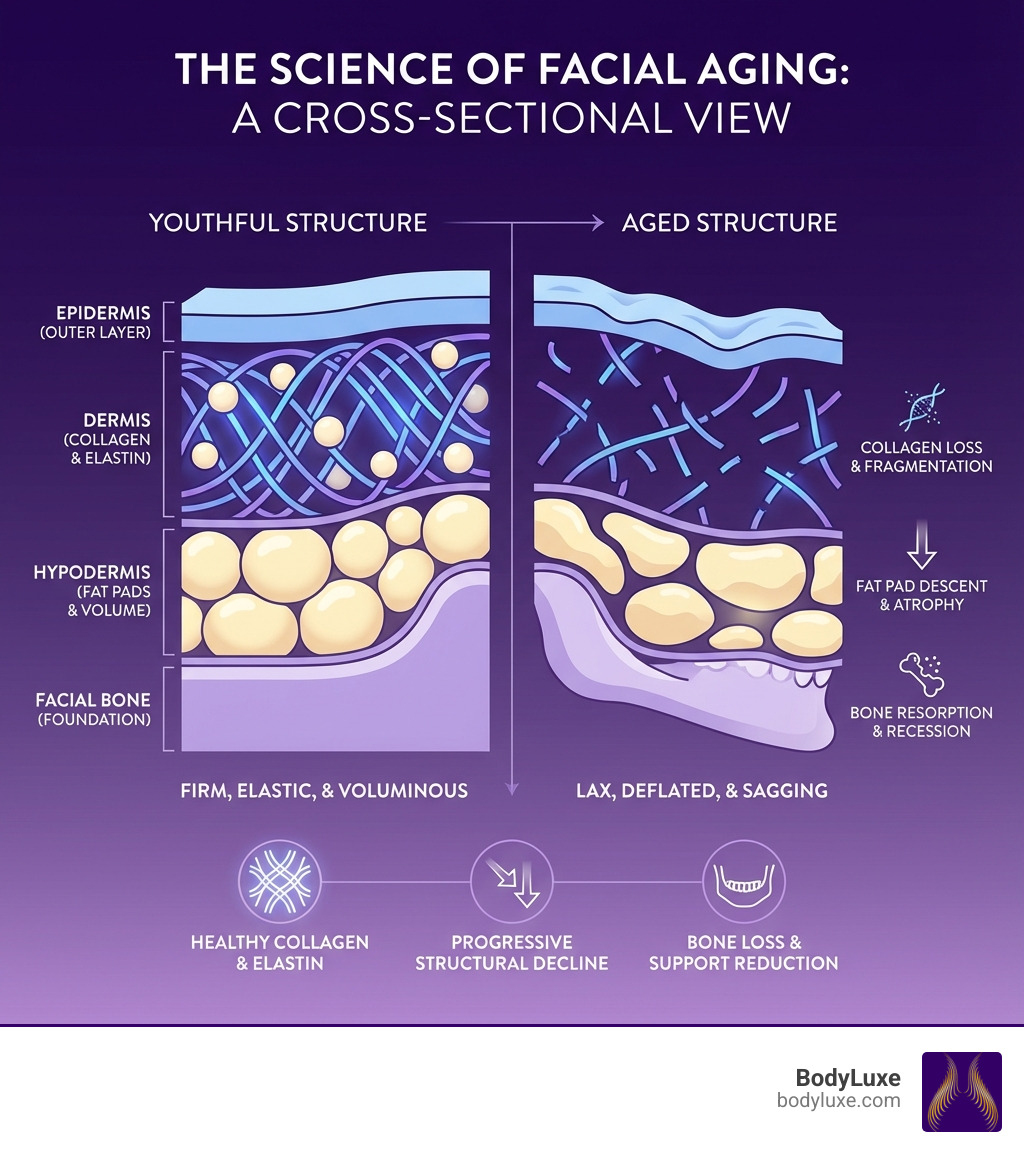
- Collagen and Elastin Decline: These are the fundamental proteins that provide our skin with its structure, firmness, and elasticity. As we age, our bodies produce less collagen and elastin, and existing fibers break down. Think of collagen as the scaffolding and elastin as the springs—when they weaken, the skin loses its bounce and starts to sag. You can learn more about this vital protein in our article, What is Collagen? Why Do I Need It and How Do I Build More?.
- Fat Compartment Shifts: Our faces have distinct fat pads that give us a youthful fullness. Over time, these fat pads can shrink, shift, or descend due to gravity, leading to hollows under the eyes, flattened cheeks, and prominent nasolabial folds (the lines from your nose to the corners of your mouth).
- Bone Structure Changes: It might surprise you, but our facial bones also change with age. Bone shrinkage, particularly around the eye sockets, jawline, and chin, reduces the underlying support for facial tissues, contributing to sagging and a less defined facial contour. This is a key aspect discussed in The anatomy of the aging face: A Review.
- Sun Damage: Chronic exposure to ultraviolet (UV) radiation from the sun is a major culprit. UV rays damage collagen and elastin fibers, leading to premature aging, wrinkles, and skin laxity.
- Lifestyle Factors: Habits like smoking, a high-sugar diet, chronic stress, and lack of sleep can all accelerate the aging process by contributing to collagen breakdown and reduced skin health.
Understanding these underlying causes helps us appreciate how non-surgical treatments can effectively target specific issues, often with impressive, natural-looking results.

The Spectrum of Non-Surgical Facelift Alternatives
The beauty of modern aesthetic medicine is the sheer variety of options available to refresh your appearance without surgery. The global aesthetic market is booming, and non-surgical procedures account for millions annually. This growth reflects our collective desire for effective, yet less invasive, solutions.
The main benefits of choosing non-surgical facelift alternatives over traditional surgery include:
- Minimally Invasive: Most involve injections or external devices, meaning no large incisions or general anesthesia.
- Reduced Downtime: Recovery is typically much shorter, often just a few days or even hours, compared to weeks or months for surgery.
- Lower Risks: While all procedures carry some risk, non-surgical options generally have fewer potential complications than surgery.
- Cost-Effective: While results may not be as dramatic or long-lasting as surgery, the upfront cost is significantly less.
- Natural-Looking Results: Many non-surgical treatments stimulate your body’s natural processes, leading to subtle, gradual, and authentic-looking improvements.
We can categorize the different types of minimally invasive facelift alternatives into several key areas, each targeting specific concerns:
Energy-Based Devices: The Best Alternative to a Surgical Facelift for Skin Laxity
If skin laxity and sagging are your primary concerns, energy-based devices offer an excellent best alternative to surgical facelift. These technologies harness various forms of energy to heat the deeper layers of your skin, stimulating your body’s natural collagen production process. This heat-induced collagenesis leads to gradual tightening and lifting over time.
Here’s how some of the leading energy-based treatments work:
- Ultrasound (Ultherapy): This innovative American technology uses high-intensity focused ultrasound (HIFU) to deliver precise thermal energy deep beneath the skin’s surface. Ultherapy is unique because it’s the only FDA-cleared, non-invasive procedure that specifically targets the deep foundational layer of tissue—the Superficial Musculoaponeurotic System (SMAS)—that doctors address in cosmetic surgery. By heating this layer, Ultherapy stimulates neocollagenesis (new collagen production), resulting in gradual tightening and lifting of the skin on the brow, chin, neck, and décolletage. An ideal candidate for Ultherapy has mild to moderate skin laxity. Results appear gradually over two to three months and can last up to six months, with some lasting longer.
- Radiofrequency (RF) Treatments (e.g., Thermage): Radiofrequency devices gently heat the dermis (the middle layer of your skin) to stimulate collagen and elastin production. Thermage, for example, uses RF energy to tighten existing collagen and kickstart new collagen growth. It can be used on the face, neck, and even other body areas like the belly to tighten loose skin after birth or for cellulite reduction. Thermage treatments typically last about an hour, and results can last several years.
- Laser Skin Tightening: Non-ablative laser treatments use concentrated light energy to heat the deeper layers of the skin without damaging the surface. This controlled heating encourages collagen remodeling and new collagen growth, leading to subtle tightening and improved skin texture. For more on how these treatments work, check out The Basics You Should Know About Laser Skin Treatments.
- High-Intensity Focused Electromagnetic (HIFEM) for Facial Muscle Toning: Originally developed for body contouring, HIFEM technology has been adapted for the face to target muscle laxity. It works by delivering electromagnetic energy to stimulate involuntary muscle contractions, effectively toning, strengthening, and lifting the underlying facial support structure. This can provide a natural lift from within, improving facial contour and firmness. A typical course involves four 20-minute sessions spaced one week apart.
Energy-based treatments are often chosen by those seeking subtle yet noticeable improvements, with minimal downtime and natural-looking results that avoid the “overdone” look. We typically recommend maintaining these treatments every 1-2 years for sustained benefits.
Injectables: The Best Alternative to a Surgical Facelift for Volume Loss
When it comes to addressing volume loss and contouring the face, injectables are often considered the best alternative to surgical facelift. These treatments involve precise injections to restore youthful fullness, smooth lines, and redefine facial features, often referred to as a “liquid facelift.”
Here’s how different types of injectables contribute to facial rejuvenation:
- Dermal Fillers (The “Liquid Facelift”): These are the workhorses of volume restoration. Dermal fillers, primarily made of hyaluronic acid (HA), are injected to plump up hollow areas, smooth wrinkles, and contour the face. Hyaluronic acid is a substance naturally occurring in the body that helps add volume and hydration to the skin. Popular HA fillers include JUVEDERM, Radiesse, and Restylane. By strategically placing fillers in areas like the cheeks, temples, and jawline, we can create an immediate lifting and plumping effect, mimicking some of the results of a surgical facelift without the recovery. Results typically last from six months to two years, depending on the specific product and treatment area.
- Collagen-Stimulating Injectables: Unlike HA fillers that primarily add volume, these injectables work by stimulating your body’s own collagen production over time. Poly-l-Lactic Acid (PLLA), such as Sculptra, is a prime example. PLLA-SCA is an injectable, biodegradable biostimulator that promotes the production of collagen and elastin by stimulating regenerative pathways. This gradual restoration of your skin’s natural support structure can improve skin texture, firmness, and volume, offering a more long-term solution for facial rejuvenation. While the initial results are subtle, they improve over several months as new collagen develops. For a deeper dive into PLLA, especially in body aesthetic treatments, you can explore this Injectable Poly-l-Lactic Acid for Body Aesthetic Treatments article.
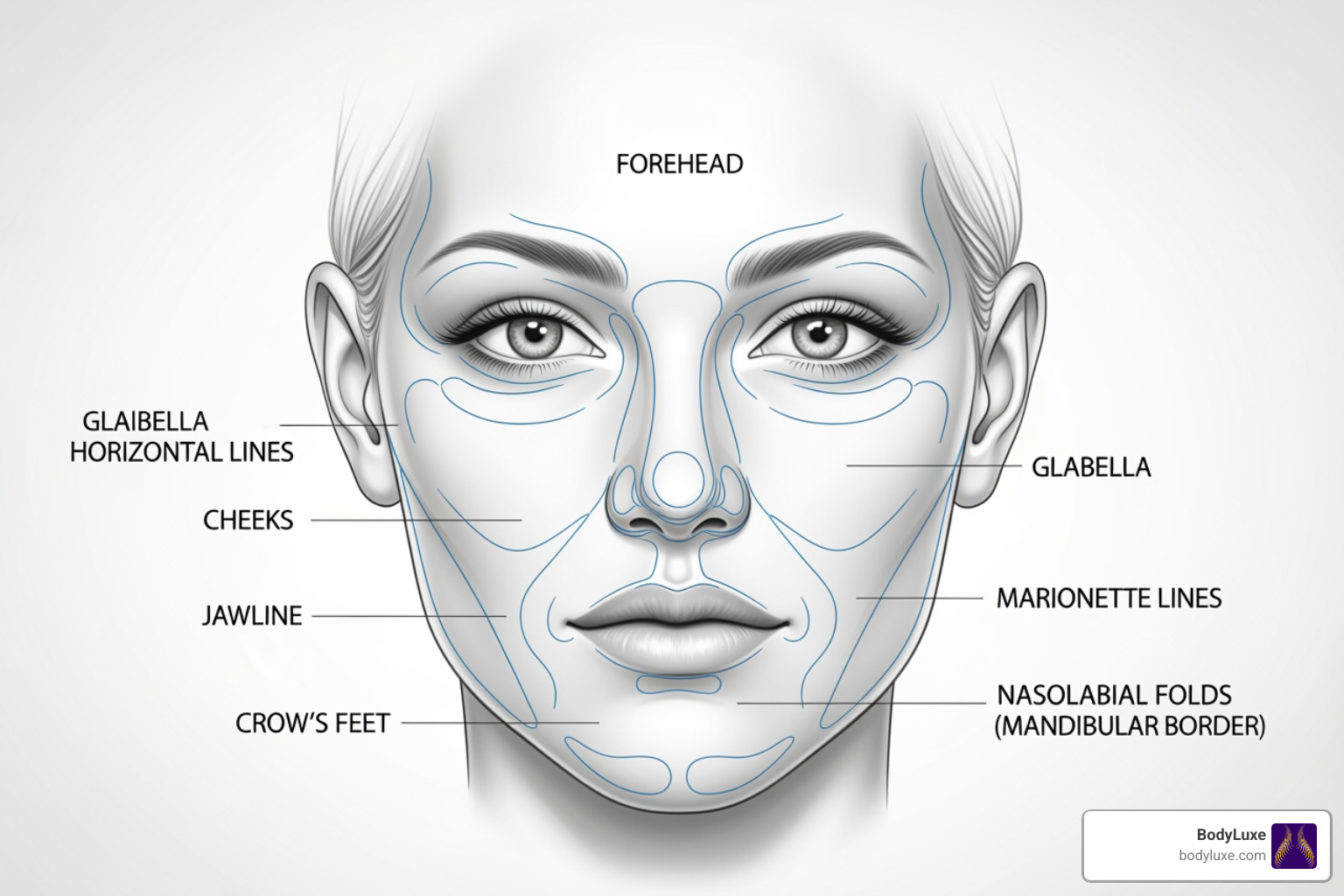
- Muscle-Relaxing Injectables (Botox): While not directly a facelift alternative, neuromodulators like Botox play a crucial role in facial rejuvenation. They work by temporarily relaxing specific facial muscles that cause dynamic wrinkles, such as crow’s feet, forehead lines, and frown lines. By smoothing these expression lines, Botox contributes to an overall refreshed and more youthful appearance.
- Fat-Reducing Injectables (Kybella): For concerns like a double chin (submental fat) that can detract from a defined jawline, Kybella offers a non-surgical solution. This injectable contains deoxycholic acid, which destroys fat cells. By reducing submental fat, Kybella helps to better define the jawline and improve the overall facial contour. Learn more about how this and similar treatments work in our guide to Non-Invasive Fat Reduction: What Is It and Does It Work?.
Injectables are highly versatile and can be custom to your unique facial anatomy and aesthetic goals, providing precise and often immediate improvements with minimal downtime.
Advanced Resurfacing and Lifting Techniques
Beyond energy-based devices and traditional injectables, several advanced techniques offer further options for non-surgical lifting, tightening, and skin texture improvement. These can be excellent choices when considering the best alternative to surgical facelift.
- Thread Lifts (PDO/PLLA Threads): Thread lifts involve the insertion of biodegradable medical-grade threads, typically made of Polydioxanone (PDO) or Poly-L-Lactic Acid (PLLA), into the subcutaneous layer of the skin. These threads have tiny barbs or cones that anchor to sagging tissue, providing an immediate, albeit subtle, lifting effect. As the threads dissolve over one to two years, they stimulate the body’s natural collagen production, leading to sustained skin tightening and rejuvenation. Thread lifts are minimally invasive, completed in under an hour, and offer minimal downtime.
- Radiofrequency (RF) Microneedling: This innovative treatment combines two powerful technologies for improved results. Tiny needles create controlled micro-injuries in the skin, a process known as microneedling, which triggers a natural healing response and collagen production. Simultaneously, radiofrequency energy is delivered directly into the dermis through these needles. This dual action significantly boosts the production of collagen and elastin, leading to improved skin texture, reduced scarring, and noticeable skin tightening. It’s safe for all skin types and can address concerns like fine lines, wrinkles, acne scars, and lax skin on the face, jawline, and neck. For more details on microneedling, check out What is Micro-Needling and What Are the Benefits?.
- Plasma Pen Therapy (Fibroblast Treatment): This non-invasive treatment uses a device to deliver an electrical arc of ionized gas (plasma) to the skin’s surface. This creates controlled micro-injuries, causing immediate tissue contraction and stimulating fibroblasts—the cells responsible for producing collagen and elastin. The result is significant skin tightening, particularly effective for delicate areas like the eyelids (offering a non-surgical blepharoplasty effect) and around the mouth. Full effects of collagen production are most apparent after about three months.
- Chemical Peels: Chemical peels involve applying a chemical solution to the skin to exfoliate the damaged outer layers. By removing these superficial layers, peels can dramatically improve skin texture, tone, and clarity. They are effective in reducing the appearance of fine lines, sun damage, acne scars, and hyperpigmentation. While they don’t offer a “lift” in the traditional sense, improving skin quality can contribute significantly to a more youthful appearance. Depending on the depth of the peel, downtime can range from a few days to a couple of weeks.
- Laser Skin Resurfacing: Laser skin resurfacing uses concentrated light energy to create microscopic treatment zones in the skin. This controlled thermal injury prompts the body’s natural healing response, clearing away damaged cells and accelerating the production of new collagen and elastin. Laser resurfacing can dramatically improve skin texture, tone, and clarity, reducing the appearance of fine lines, deep wrinkles, and sun damage. Results become most apparent after about three months, and careful sun protection is crucial post-treatment.
These advanced techniques offer powerful solutions for those seeking significant improvements in skin quality and mild to moderate lifting without the invasiveness of surgery.
A Holistic Approach: At-Home Care and Traditional Methods
Achieving and maintaining a youthful appearance isn’t just about professional treatments; it’s also about consistent at-home care and embracing time-honored practices. These methods can support and improve the results of professional procedures, making them a crucial part of finding the best alternative to surgical facelift for you.
- Medical-Grade Skincare: The foundation of any anti-aging regimen is a robust skincare routine. Medical-grade products, available through professional clinics, contain higher concentrations of active ingredients than over-the-counter options.
- Retinoids: These vitamin A derivatives are gold standard ingredients for anti-aging. They stimulate collagen production, accelerate cell turnover, and reduce the appearance of fine lines and wrinkles. Learn more in Essential Things to Know Before Using Retinol and Retinoids. For a deeper dive, read Understanding Retinol and How to Use It Properly.
- Antioxidants: Ingredients like Vitamin C and E protect the skin from environmental damage and help prevent collagen breakdown.
- Moisturizers: Hydrated skin looks plumper and more youthful.
- Sunscreen: Daily use of broad-spectrum sunscreen with an SPF of 30 or higher is non-negotiable. UV damage is a leading cause of premature aging, so protecting your skin is paramount. As we always say, SPF is Your BFF!
- At-Home Devices: Many devices are now available for home use, including microcurrent devices (which stimulate facial muscles for temporary toning) and LED masks (which can boost collagen production). While they offer subtle improvements, they can be a great complement to professional treatments.
- Traditional Techniques: Across cultures, people have developed natural methods for skin tightening and face firming:
- Gua Sha (Traditional Chinese Medicine): Employed for over two millennia, gua sha involves scraping the skin with a smooth-edged instrument (like jade or rose quartz) to boost blood flow, lessen inflammation, and promote lymphatic drainage. This can lead to a more sculpted appearance and reduced puffiness.
- Japanese Facial Rejuvenation (Kobido, Facial Yoga): Ancient Japanese practices like Kobido massage use acupressure and lymphatic drainage to improve skin elasticity and diminish wrinkles. These are often paired with facial yoga exercises, which aim to strengthen facial muscles and improve blood flow, contributing to a firmer look.
- Ayurvedic Facelift Practices (Abhyanga, Marma Point Therapy): From India, Ayurvedic skincare includes Abhyanga, a self-massage with nutrient-rich herbal oils (like neem or almond oil) to promote healthier skin. Marma point therapy targets specific energy points on the face, believed to improve energy balance and support physiological functions, leading to facial renewal.
- French Beauty Secrets: French beauty regimens often emphasize daily, gentle facial massages with upward stroking techniques. This consistent practice is believed to improve skin texture, boost circulation, and maintain firmness and contouring over time.
- Middle Eastern Natural Remedies: Traditions from the Middle East often use natural ingredients like honey and olive oil for skin firming, softening, and refreshing. Sea salt can be used as a natural exfoliant to improve blood flow and remove dead skin cells.
- African Botanical Treatments: Nutrient-dense botanicals such as baobab and shea butter are celebrated for their profound moisturizing properties, effectively minimizing the appearance of age-related changes and enhancing skin texture and liveliness.
While at-home methods and traditional practices offer subtle improvements and are excellent for skin health, they typically won’t achieve the dramatic lifting and tightening effects of professional non-surgical or surgical procedures. However, their consistent use can significantly support and prolong the results of clinical treatments.
Making the Right Choice: Surgical vs. The Best Alternative to a Surgical Facelift
Deciding between a traditional surgical facelift and a non-surgical alternative is a deeply personal choice. It hinges on your individual needs, aesthetic goals, and tolerance for invasiveness, downtime, and cost. We believe in providing you with all the information to make an informed decision about what the best alternative to surgical facelift is for you.
Here’s a comparison to help illustrate the key differences:
| Feature | Traditional Surgical Facelift | Non-Surgical Alternatives |
|---|---|---|
| Invasiveness | Highly invasive (surgical incisions) | Minimally invasive (injections, threads, minimal laser) |
| **D | ||
| Downtime | Weeks to months (healing, swelling, bruising) | Minimal (days to a few days) |
| Cost | High (surgery, anesthesia, hospital fees) | Moderate (multiple sessions, but less than surgery) |
| Results | Permanent, dramatic, long-lasting | Temporary, varied, generally subtle to moderate |
| Best For | Significant sagging, excess skin, deep wrinkles, extensive jowl formation | Mild to moderate skin laxity, volume loss, fine lines, texture issues |
Individual Needs and Goals: The first step in choosing the best alternative to surgical facelift is a clear understanding of your concerns and what you hope to achieve. Are you looking for a subtle refresh or more significant rejuvenation? Do you want to address skin texture, volume loss, or sagging? Your age, skin elasticity, overall health, and lifestyle all play a role in determining the most suitable options.
Severity of Laxity: For individuals with significant sagging, excess skin, and deep creases, a traditional surgical facelift remains the most effective solution. However, for those with mild to moderate laxity, or those seeking preventative measures, non-surgical options can deliver impressive results.
Combination Therapy: One of the most exciting developments in non-surgical aesthetics is the power of combination therapy. Instead of relying on a single treatment, combining different modalities can address multiple signs of aging simultaneously, leading to improved and more comprehensive results. For example, we might combine Ultherapy for deep lifting, dermal fillers for volume restoration, and RF microneedling for surface texture improvement. This synergistic approach allows us to “architect” a personalized rejuvenation plan that delivers a natural, proportionate, and “snatched but believable” outcome.
The Importance of Consultation: The internet offers a wealth of information, but it cannot replace the trained eye and diagnostic expertise of a board-certified professional. As highlighted in Traditional facelift vs noninvasive facelift, a consultation is crucial. During your consultation, we will assess your skin elasticity, volume loss, bone structure, and lifestyle. We’ll discuss your aesthetic sensibilities and goals, considering your general health, available healing time, and other concerns to determine which procedure option, or combination of procedures, will be most beneficial for you. This expert guidance is the most important step in designing a personalized rejuvenation plan and setting realistic expectations.
Your Path to Natural Rejuvenation
We’ve explored a vast landscape of options, from cutting-edge energy devices to time-honored traditional practices, all offering compelling alternatives to a surgical facelift. The key takeaway is this: achieving a refreshed, more youthful appearance no longer automatically means going under the knife. With modern advancements, we have a powerful toolkit of non-surgical treatments that can deliver natural, proportionate, and truly transformative results.
At BodyLuxe in Chicago, our commitment is to evidence-based care, patient safety, and achieving outcomes that help you look as vibrant as you feel. We understand that choosing the best alternative to surgical facelift is a significant decision, and it’s one we approach with meticulous attention to detail and a deep understanding of facial anatomy and aesthetic harmony.
Your journey to natural rejuvenation begins with a conversation. We invite you to experience a personalized consultation where we can listen to your concerns, assess your unique facial structure, and design a bespoke treatment plan custom precisely to your needs and goals. We’re here to guide you through every step, ensuring you feel confident and informed.
Discover your ideal skin tightening solution in Chicago and let us help you unveil your most radiant self.