
Skin Tightening: 4 Best Effective Options
Why Skin Loses Firmness Over Time
Skin tightening refers to non-surgical or surgical procedures that restore firmness to loose or sagging skin by stimulating collagen production or removing excess tissue. The most common non-surgical options include:
- Ultrasound skin tightening – Uses focused energy to heat deep skin layers (up to 5mm), stimulating collagen over 2-6 months
- Radiofrequency (RF) therapy – Heats the skin’s surface and deeper layers to trigger immediate tightening and long-term collagen remodeling, with results lasting 1-3 years
- Laser treatments – Convert light energy to heat in targeted zones, typically requiring 3-5 sessions for visible improvement
- Intense Pulsed Light (IPL) – Often combined with RF to treat skin tone, texture, and mild laxity
These treatments work best for mild to moderate skin laxity and require little to no downtime, though results appear gradually and may need maintenance every 18-24 months.
Loose, sagging skin is one of the most common concerns people bring to aesthetic clinics. It happens because your body slows down production of collagen and elastin—the proteins that keep skin firm and elastic—starting as early as your 20s.
Sun exposure accelerates the breakdown of these fibers. Weight loss, pregnancy, and genetics also play a role. The result? Skin that used to snap back now droops, especially around the jawline, neck, abdomen, and upper arms.
The good news is that modern energy-based treatments can stimulate your body to rebuild collagen from the inside out. You don’t need surgery to see meaningful improvement if your laxity is mild to moderate.
I’m Daniel J. Farrugia, MD, PhD, FACS, a board-certified surgeon specializing in awake body contouring at BodyLuxe in Chicago. While my focus is primarily on liposuction and fat transfer, I routinely counsel patients on complementary skin tightening options—especially when someone has great underlying contour but needs help with surface firmness after weight loss or aging. In this guide, I’ll walk you through the most effective non-surgical technologies, what they cost, who benefits most, and how to choose a qualified provider.
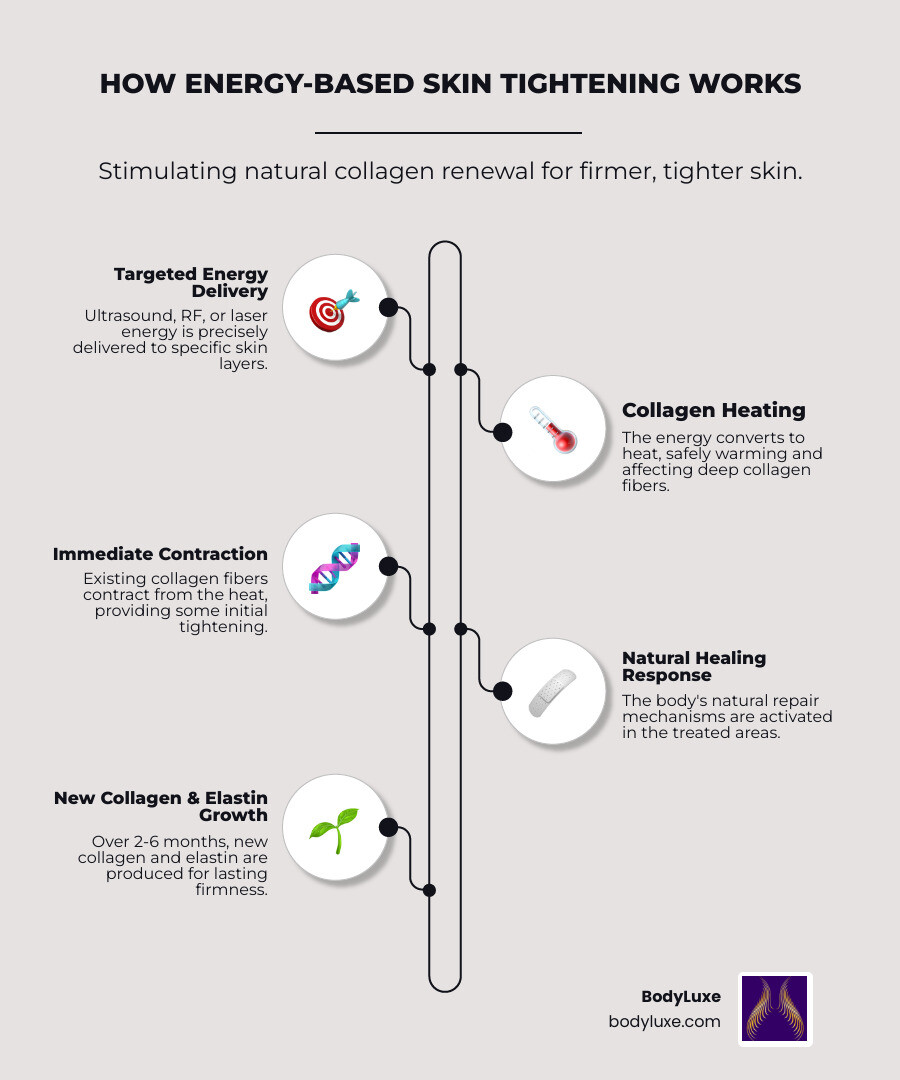
Handy skin tightening terms:
Introduction: Why Skin Loses Firmness
As we age, our skin undergoes a series of changes that lead to the loss of its youthful firmness and elasticity. This natural process is primarily driven by a decline in the production of two essential proteins: collagen and elastin. Think of collagen as the scaffolding that provides structure and firmness to our skin, and elastin as the springs that allow it to stretch and snap back into place. As early as your 20s, the body’s ability to produce these vital proteins begins to slow down, leading to a gradual weakening of the skin’s support structure.
However, aging isn’t the only culprit. Several factors contribute to skin laxity over time:
- Aging Process: Beyond the natural decrease in collagen and elastin, the aging process also involves a reduction in subcutaneous fat, which further contributes to a hollowed or sagging appearance. Our skin cells also become less efficient at repair and regeneration.
- Sun Exposure: Chronic exposure to the sun’s ultraviolet (UV) rays is a major accelerator of skin aging. UV radiation damages collagen and elastin fibers, breaking them down prematurely and hindering the skin’s ability to repair itself. This results in wrinkles, fine lines, and increased sagging.
- Weight Fluctuations: Significant weight loss, especially rapid or substantial amounts (e.g., 100 pounds or more), can leave behind loose, excess skin that struggles to conform to the body’s new contours. Similarly, the stretching of skin during pregnancy can lead to laxity, particularly around the abdomen and breasts. For those interested in understanding how their body’s collagen levels affect their skin, we have a detailed guide on What is Collagen? Why Do I Need It? And How Do I Build More?.
- Genetics: Our genetic makeup plays a role in how our skin ages and how prone we are to developing loose skin. Some individuals naturally have stronger collagen and elastin networks or more efficient repair mechanisms.
- Lifestyle Factors: Smoking, poor nutrition, dehydration, and even chronic stress can all contribute to the breakdown of collagen and elastin, accelerating the appearance of loose skin.
The scientific community has extensively studied the intricate relationship between collagen, elastin, and skin firmness. Research highlights that as collagen and elastin production slows, the skin loses its plumpness, firmness, and smoothness, leading to areas of lax, sagging skin on the face, neck, and body. Non-surgical skin tightening can temporarily halt this process and help restore a firmer, smoother appearance (as noted in scientific research on collagen and elastin).
Your Guide to Non-Surgical Skin Tightening Procedures
The landscape of non-surgical skin tightening has evolved dramatically, offering a range of advanced treatments designed to refresh your appearance without the need for incisions or extensive downtime. These innovative procedures generally operate on a similar principle: they use targeted energy to heat deeper layers of the skin, which in turn stimulates your body’s natural healing response. This process, known as neocollagenesis, encourages the production of new collagen and elastin, leading to gradual improvements in skin tone, texture, and firmness.
One of the most compelling advantages of non-surgical skin tightening is the minimal downtime involved. Most treatments are performed in-office, often in an hour or less, and you can typically resume your normal activities immediately. While the results are not as dramatic as surgical options, they provide a noticeable “lifting” effect and a very low risk of adverse effects when performed by a qualified provider, as highlighted in a 2010 update on tissue tightening.
Let’s explore the main types of non-surgical skin tightening procedures available in Chicago.
How Ultrasound Skin Tightening Works
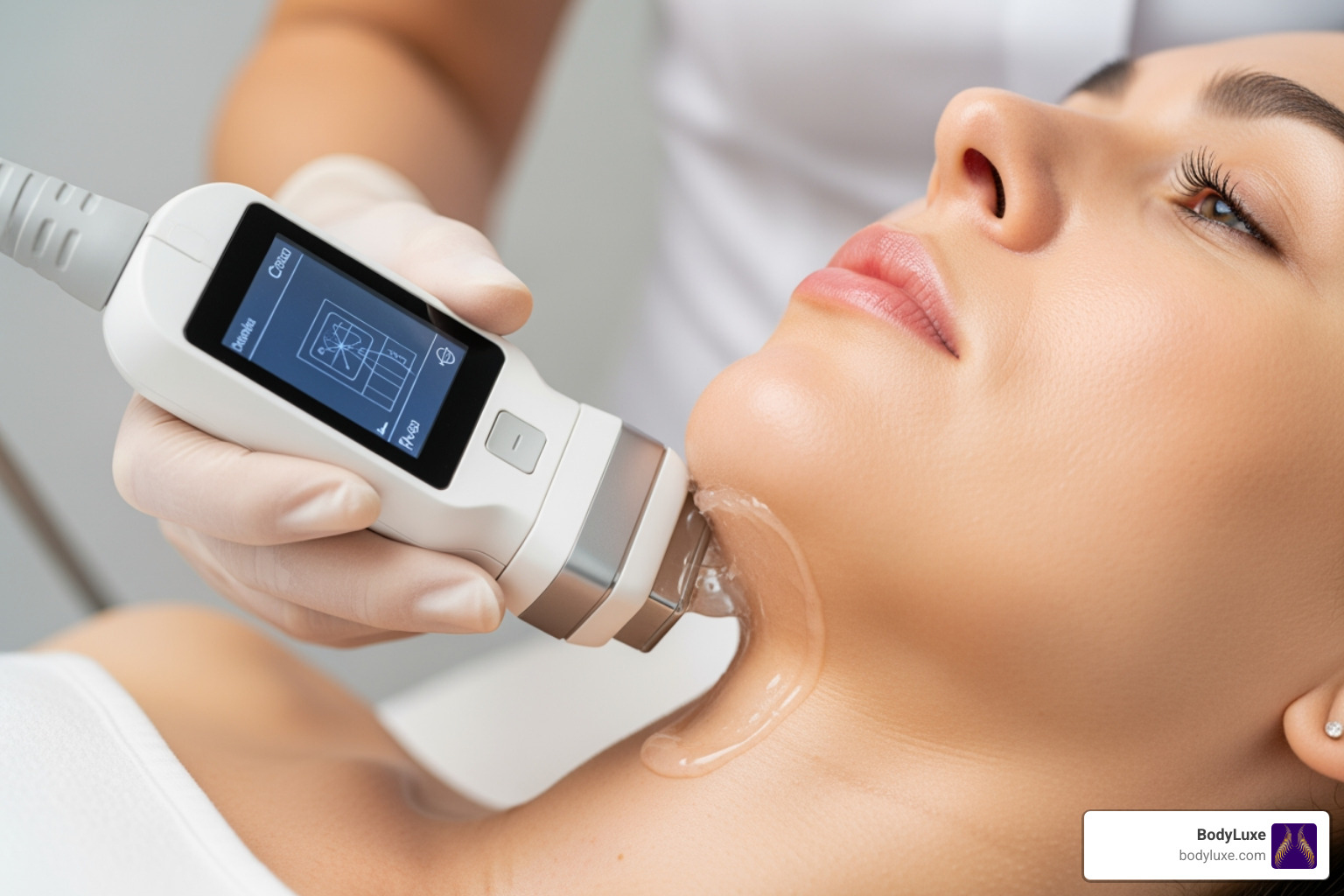
Ultrasound skin tightening treatments, such as Ultherapy®, use focused ultrasound energy to deliver heat to specific depths within the skin, up to 5mm deep. This precise targeting allows for direct stimulation of collagen production in the foundational layers of the skin, where firmness originates. The handheld device transmits ultrasound waves through the skin’s surface, reaching the targeted tissue without disturbing the outer layers.
- Benefits: This method is renowned for its ability to provide a noticeable “lifting” effect, particularly on the brows, chin, neck, and chest. It’s an excellent option for patients who want to treat early signs of aging and can even help postpone the need for facelift surgery. Treatments typically take 30 to 90 minutes, with no downtime. Patient satisfaction surveys, such as one from the Journal of Drugs and Dermatology, have reported positive outcomes from microfocused ultrasound with visualization.
- Limitations: While effective, the results are gradual, taking anywhere from two to six months to fully appear as your body produces new collagen. It’s best suited for mild to moderate skin laxity.
- Ideal for: Individuals with mild to moderate laxity around the face and neck, including a sagging brow line, loose skin under the chin, or lines on the décolletage. Our Ellacor for Face Tightening service, for example, is designed to address these concerns and more; you can learn more info about Ellacor for Face Tightening.
Radiofrequency (RF) Therapy Explained
Radiofrequency (RF) therapy is another popular non-surgical approach to skin tightening that uses RF energy to heat the skin. Unlike ultrasound, which targets deeper foundational layers, RF energy focuses on the epidermal and superficial dermal layers to achieve a firmer, smoother appearance. This controlled heating causes existing collagen fibers to contract immediately, offering some initial tightening, while also stimulating fibroblasts to produce new collagen over time.
- How it works: RF devices deliver energy that heats the tissue beneath the skin’s surface. This thermal energy triggers a wound-healing response, leading to increased collagen and elastin production. Brand names you might encounter include Profound® RF, Exilis®, Morpheus8®, Renuvion, and Thermage®.
- Advantages: RF treatments are generally safe for all skin types. They can be used on various areas, including the face, neck, chest, stomach, legs, and arms. A 2015 review of medical literature found that 96 percent of studies concluded radiofrequency achieved significant results for skin tightening, although some research did note limitations in study design. More recently, a 2017 study on 25 participants concluded that radiofrequency-based methods were effective after five to eight treatments, with participants reporting very high satisfaction rates. We offer advanced RF treatments for Body Sculpting Radio Frequency.
- Disadvantages: While results can last up to three years with proper skincare, multiple sessions (typically two to six) are often required to achieve desired outcomes. The effects are also gradual, appearing over weeks to months. Some procedures, like AcceptRF®, are considered “subdermal” and require a very small incision and local anesthesia. For more technical insights, you can explore research on nonsurgical tightening with radiofrequency.
What to Expect from Laser Skin Tightening
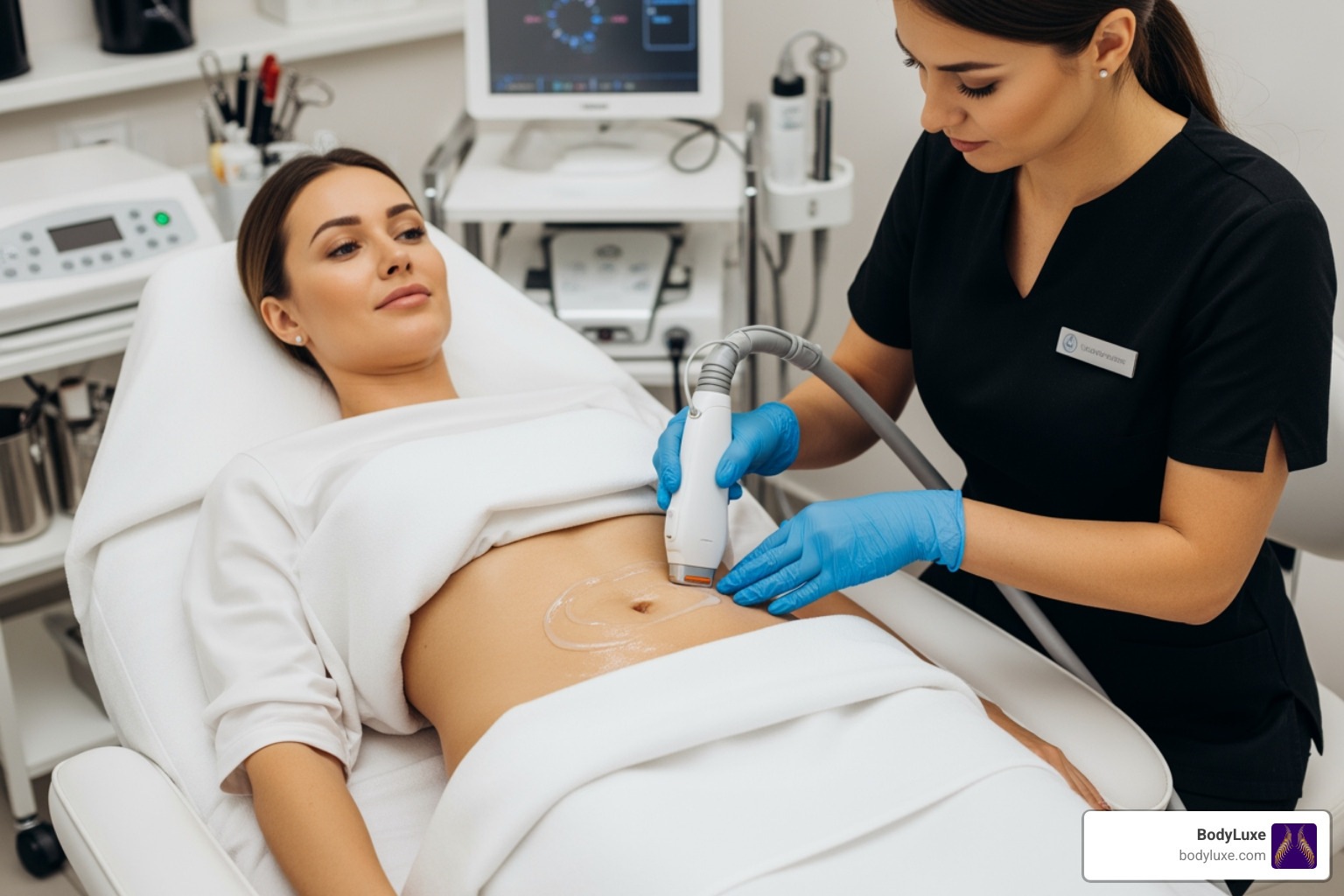
Laser skin tightening treatments convert light energy into heat to target specific areas of the skin. This controlled thermal injury encourages the body’s natural healing process, prompting the production of new collagen and elastin fibers. There are two main categories:
- Non-ablative lasers: These heat the underlying skin tissue without damaging the surface. This means little to no downtime, but results are more gradual and typically require multiple sessions. They work by creating microthermal treatment zones that stimulate collagen remodeling.
Ablative lasers: These remove the outermost layer of skin while heating the deeper layers. They offer more dramatic results but come with a longer recovery period (typically 5 to 7 days).
Effectiveness: Laser treatments can be particularly effective on areas like the belly and upper arms, as well as the face and neck. They can improve not only laxity but also skin texture, fine lines, and even some pigmentation issues.
- Typical Treatment Course: Most people receive three to five laser treatments, spaced several weeks apart. Results usually appear between two and six months after the final treatment as collagen continues to rebuild. For a comprehensive overview of how these treatments work and what to expect, check out The Basics You Should Know About Laser Skin Treatments.
Intense Pulsed Light (IPL) Therapy
Intense Pulsed Light (IPL) therapy is another light-based treatment, distinct from lasers because it uses a broad spectrum of light rather than a single wavelength. While IPL is primarily known for treating pigmentation, sun damage, and vascular lesions, it can also contribute to skin tightening, especially when combined with radiofrequency (RF) energy.
- How it’s used for skin tightening: When combined with RF, IPL delivers heat to deeper layers of the skin, triggering the natural healing response and stimulating collagen production. This combination allows providers to treat a larger area of skin and address multiple concerns simultaneously, including skin laxity, tone, and texture.
- Benefits: IPL/RF combination treatments can provide comprehensive skin rejuvenation, addressing discoloration and mild laxity at the same time.
- Limitations: IPL treatments are generally not recommended for individuals with tanned or darker skin tones due to the risk of pigmentation changes. It’s crucial to consult with a qualified provider to determine if IPL is suitable for your skin type. For more information on various non-invasive options, including those that might incorporate IPL, explore our page on Non-Invasive Procedures.
Candidacy, Costs, and Expected Results
Choosing the right skin tightening treatment involves understanding whether you’re a good candidate, what the financial investment will be, and what realistic results you can expect. Non-surgical options are best suited for individuals with mild to moderate skin laxity who maintain a healthy lifestyle and have realistic expectations about the outcomes. While they offer significant improvements, they are not a substitute for surgical procedures in cases of severe laxity. However, for many, they represent the Best Alternative to Surgical Facelift or body lift.
Who is a Good Candidate for Treatment?
Non-surgical skin tightening procedures are ideal for a specific profile of individuals:
- Patients with early signs of aging: If you’re starting to notice your skin getting looser or beginning to sag along the jawline, midface, neck, or chest, you’re likely a good candidate. These treatments can help postpone the need for more invasive surgery.
- Post-pregnancy skin laxity: Many new mothers experience loose skin around the abdomen. Non-surgical treatments can help restore firmness to these areas.
- After significant weight loss: For individuals who have lost weight and are left with mild to moderate loose skin, especially on the arms, thighs, or abdomen, these treatments can provide a significant improvement. Our services for Body Contouring After Weight Loss often incorporate such tightening procedures.
- Realistic Expectations: Non-surgical treatments provide gradual, natural-looking results, not the dramatic change of a surgical facelift or body lift. They are not effective for advanced skin laxity resulting from extreme aging or massive weight loss.
- Contraindications: You may not be a good candidate if you are pregnant, have a skin infection in the treatment area, or are taking certain medications. Individuals with specific medical conditions should also discuss these thoroughly with their provider.
The best results are typically seen in patients who are at a healthy weight, eat a healthy diet, avoid smoking, drink alcohol in moderation, and protect their skin from sun exposure.
Typical Costs and How Long Results Last
The cost of non-surgical skin tightening treatments can vary significantly based on the technology used, the size of the treatment area, the number of sessions required, and your geographic location (such as Chicago). Here’s a general overview of average costs and how long results tend to last:
| Treatment Type | National Average Cost (per session) | Typical Cost Range | Number of Sessions | Result Duration |
|---|---|---|---|---|
| Ultrasound Tightening | $993 | $770 to $1,862 | 1-3 | 1-2 years |
| Radiofrequency (RF) | $755 | $582 to $1,448 | 2-6 | 1-3 years |
| Non-Ablative Laser | $1,815 | $995 to $3,678 | 3-5 | 1-2 years |
| IPL Treatment | $126 | $98 to $243 | 3-5 | 6 months – 1 year |
(Costs are national averages and can vary. IPL costs are typically lower as it’s often combined or used for broader skin concerns.)
Duration of Results:
The longevity of skin tightening results varies by individual and treatment type. For many non-surgical procedures, results can last anywhere from one to three years, especially with proper skincare and a healthy lifestyle. However, your skin continues to age, and maintenance treatments every 18-24 months may be recommended to sustain optimal firmness and elasticity. Results from treatments that stimulate collagen production take some time to work, with most patients seeing positive changes within a couple of weeks and continued improvement for up to 3-6 months.
Potential Side Effects and Risks
One of the significant advantages of non-surgical skin tightening is the very low risk of adverse effects when performed by a qualified provider. However, as with any medical procedure, there are potential side effects and risks, most of which are mild and temporary.
Common, temporary side effects include:
- Temporary Redness: The treated area may appear red immediately after the procedure, similar to a sunburn. This usually subsides within a few hours to a day.
- Swelling: Mild swelling is common and typically resolves within a day or two.
- Bruising: While less common, minor bruising can occur, especially with treatments that involve deeper penetration or microneedling. This usually fades within a week.
- Mild Discomfort: You might experience a warming sensation, tingling, or mild discomfort during the treatment. Most providers use cooling mechanisms or topical numbing creams to improve comfort.
Rare but more serious risks can include:
- Burns: Although rare with modern devices and experienced practitioners, improper technique or device settings can lead to superficial burns.
- Scarring: Extremely rare for non-surgical treatments, but a theoretical risk if tissue damage is severe.
- Pigmentation Changes: Particularly with light-based therapies like IPL, there’s a small risk of temporary or, in very rare cases, permanent hyperpigmentation (darkening) or hypopigmentation (lightening), especially in individuals with darker skin tones or if the skin is tanned.
The key to minimizing risks and ensuring a safe and effective outcome lies in choosing a highly qualified and experienced provider. We cannot stress enough the importance of seeking treatment from a licensed professional under the supervision of a doctor.
How to Choose a Qualified Provider
Choosing the right provider for your non-surgical skin tightening journey is paramount to achieving safe and satisfactory results. In Chicago, you have several options, but not all providers offer the same level of expertise or safety.
Here’s what to look for:
- Board-Certified Surgeon or Dermatologist: For any aesthetic procedure, especially those involving energy-based devices, a board-certified surgeon or dermatologist is typically the most qualified. They possess extensive knowledge of facial and body anatomy, skin physiology, and the intricacies of various energy devices. This ensures they can accurately assess your needs, select the most appropriate treatment, and manage any potential complications.
- Licensed Aesthetician Under Physician Supervision: For completely non-invasive treatments, a licensed aesthetician or registered nurse (RN) can perform the procedure, but it should always be under the direct supervision of a physician. This ensures that medical oversight is available if needed.
- Experience with Specific Technology: Inquire about the provider’s experience with the specific skin tightening technology you are considering. Ask how many procedures they have performed, and how long they have been using the particular device. Experience matters, as it contributes to both efficacy and safety. For example, the use of microneedle radiofrequency (RF) and fractional RF skin resurfacing requires specialized training and expertise.
- Thorough Consultation Process: A reputable provider will conduct a comprehensive consultation. This includes:
- Examining your skin: A detailed assessment of your skin laxity, texture, and overall health.
- Discussing your goals and expectations: Ensuring your desired outcomes are realistic and align with what non-surgical treatments can achieve.
- Reviewing your medical history: To identify any contraindications or factors that might affect your treatment.
- Explaining the procedure in detail: Including how it works, what sensations to expect, potential side effects, and post-treatment care.
- Providing before and after photos: To showcase their work and help you visualize potential results.
- Understanding of Facial and Body Anatomy: A deep understanding of the underlying anatomy is crucial for targeting energy effectively and safely, preventing damage to nerves or other structures, and achieving natural-looking results.
- Focus on Safety and Evidence-Based Practice: At BodyLuxe, we pride ourselves on a safety-first, evidence-based approach. We believe in transparent communication about what treatments can achieve and ensuring every procedure is performed with the highest standards of care.
Frequently Asked Questions about Skin Tightening
We understand that considering skin tightening treatments can bring up many questions. Here, we address some of the most common concerns our patients in Chicago have.
Do non-surgical skin tightening treatments hurt?
The sensation experienced during non-surgical skin tightening treatments can vary depending on the technology used and your individual pain tolerance. Most patients describe it as a warming sensation, deep heat, or a light snapping feeling. While some discomfort is typical, it’s generally mild and temporary.
For treatments like ultrasound, you might feel deep heat or tingling. With radiofrequency, a warm sensation is common. Many devices incorporate cooling mechanisms to protect the skin’s surface and improve comfort. Topical numbing cream can often be applied before the procedure to minimize any discomfort. We always encourage open communication during your treatment; if you experience any uncomfortable burning sensation, it’s crucial to alert your provider immediately. Our goal is to make your experience as comfortable as possible.
How many treatments will I need?
The number of skin tightening treatments required to achieve optimal results varies significantly based on the specific technology used, the degree of skin laxity, and your individual aesthetic goals.
- Ultrasound treatments (like Ultherapy®) often show noticeable results after just one session, though some individuals may benefit from a second treatment. However, the full effect takes 2-6 months to develop.
- Radiofrequency (RF) and Laser treatments typically require a series of sessions. For RF, studies suggest five to eight treatments can be effective, and many providers recommend two to six treatments. Laser treatments usually involve three to five sessions. These are often spaced a few weeks apart to allow the skin to respond and rebuild collagen.
- IPL treatments, especially when combined with RF, also commonly require a series of three to five sessions.
During your personalized consultation, we will assess your skin and discuss your desired outcomes to create a custom treatment plan, outlining the recommended number of sessions for you.
Can I combine skin tightening with other procedures?
Absolutely! Combining skin tightening with other aesthetic procedures is a common and highly effective strategy for achieving more comprehensive and harmonious rejuvenation. Many non-surgical skin tightening treatments complement other modalities, creating a synergistic effect that improves overall results.
For instance:
- Liposuction: After removing unwanted fat with procedures like awake liposuction, skin tightening can be crucial to ensure the remaining skin conforms smoothly to the new contours. This is particularly relevant for areas like the chin, neck, and jawline, where enhancing neck tightening with Renuvion after liposuction can yield excellent results, as detailed in our guide on Liposuction of the Chin, Neck and Jawline: Enhancing Neck Tightening with Renuvion.
- Injectables: Dermal fillers can restore lost volume, and neurotoxins (like Botox) can smooth dynamic wrinkles. Combining these with skin tightening can address both volume loss and laxity for a more youthful appearance.
- Other Body Contouring: Skin tightening can be integrated into broader body contouring plans to refine results, particularly after significant weight loss or for areas like the arms, thighs, and abdomen.
Our approach at BodyLuxe is always to consider your overall aesthetic goals. We can design a comprehensive treatment plan that combines various procedures to achieve your desired “snatched but believable” results, ensuring natural proportionality and optimal outcomes.
Begin Your Skin Tightening Journey in Chicago
We’ve explored the fascinating science behind why our skin loses its youthful bounce and the remarkable ways modern non-surgical skin tightening can help. From the deep collagen stimulation of ultrasound and the broad firming power of radiofrequency to the versatile benefits of lasers and IPL, these treatments offer effective, low-downtime solutions for mild to moderate skin laxity.
The key to successful skin tightening lies not just in the technology, but in the hands of the practitioner. Choosing a qualified, experienced provider who prioritizes safety and evidence-based practice is crucial for achieving the beautiful, natural-looking results you desire.
At BodyLuxe in Chicago, we are dedicated to providing personalized care and advanced aesthetic solutions. While our specialty is awake body contouring, we understand the importance of comprehensive rejuvenation and can guide you through the best skin tightening options to complement your overall aesthetic goals. We believe in empowering our patients with clear, medically accurate information and tailoring every plan to your unique needs.
If you’re ready to explore how non-surgical skin tightening can help you achieve firmer, smoother skin and restore a more youthful appearance, we invite you to connect with us. Take the first step towards renewed confidence and find the possibilities for your skin.