
Why safety first? 4 Pillars: Essential Benefits
Why Safety First Matters in Every Workplace (and Operating Room)
Why safety first? Because prioritizing safety in any workplace—from construction sites to corporate offices to surgical suites—is not just about following rules; it’s about protecting lives, building trust, and creating an environment where people can truly thrive. A safety-first approach delivers tangible benefits:
- Prevents injuries and saves lives – Companies with strong safety cultures experience significantly fewer incidents
- Reduces costs – Fewer accidents mean lower healthcare expenses, insurance premiums, and lost productivity
- Boosts morale and engagement – Employees who feel safe are more motivated and perform better
- Strengthens reputation – A proven safety record attracts top talent and builds client confidence
- Drives efficiency – Fewer disruptions from accidents lead to smoother operations and better outcomes
Imagine a workplace where every action, big or small, is guided by one simple question: “Is this the safest way to do it?” That’s not just a compliance checkbox—it’s a shared mindset, a deep-rooted belief that everyone deserves to return home safe every day. Yet the statistics tell a sobering story: 5,333 workers died from job-related injuries in 2019, a 17 percent increase from 2010, and over 100 people die in motor vehicle crashes every day. These tragedies are often preventable.
A true safety-first culture weaves safety into the very fabric of an organization. It means leadership leads by example, employees feel empowered to speak up without fear, hazards are identified before they cause harm, and continuous improvement is baked into every process. Whether you’re managing a high-hazard construction site, running a hospital operating room, or overseeing a boutique surgical practice, the principles remain the same: value life above all else, foster open communication, and never settle for “good enough” when it comes to protecting people.
In this guide, we’ll break down what “safety first” truly means, explore the tangible business and human benefits of prioritizing safety, and walk through the four foundational pillars that turn safety from a slogan into a living, breathing part of your organization’s DNA. We’ll also address common challenges and show you practical steps to build and sustain a culture where safety becomes instinct, not afterthought.
As Daniel J Farrugia MD, PhD, FACS, a board-certified surgeon who has performed thousands of awake body-contouring procedures at BodyLuxe in Chicago, I’ve built my entire practice around the principle of why safety first matters—from rigorous patient screening and meticulous sterile technique to transparent informed consent and 24/7 post-op availability. My training at Mayo Clinic, the University of Florida, and the University of Pittsburgh, combined with years of real-world surgical experience, has reinforced that safety is never negotiable, whether you’re sculpting a waistline or managing a construction crew.
The Core Philosophy: What Does “Safety First” Truly Mean?
At its heart, the core philosophy behind a ‘safety-first’ approach is the unwavering belief that all injuries are preventable and that a zero recordable incident goal is achievable. It’s a commitment that transcends mere compliance with regulations; it’s about embedding safety as a fundamental value and an instinct into the very DNA of an organization. We believe that every individual deserves to return home safely after a day’s work, whether that work involves operating heavy machinery, performing delicate surgery, or designing software.
This philosophy is best described as a “culture of care.” It means prioritizing health and well-being not just physically, but also mentally and emotionally. It’s about fostering an environment where people feel supported, valued, and empowered. When we say “safety first,” we are asserting that the well-being of our employees, our subcontractors, our clients, and our community takes precedence over all other considerations, including speed or cost. It’s a proactive mindset that anticipates risks rather than reacting to incidents.
The Shift from Reactive to Proactive Safety
Historically, safety management often followed a reactive model: an incident occurred, an investigation ensued, and measures were put in place to prevent recurrence. While learning from mistakes is crucial, a safety-first approach champions a fundamental shift towards proactive hazard identification and risk assessment. We aim to identify potential issues before they escalate, preventing harm from happening in the first place.
This involves regularly compiling lists of identified hazards from various sources, including worker input and inspections. It’s about asking ourselves, and our teams, which tasks or situations they consider most dangerous. We then prioritize these hazards based on their severity, likelihood, and the number of workers exposed. Serious hazards are addressed immediately, and Prevention through Design (PtD) principles are applied to select inherently safer equipment, machinery, and materials right from the outset. This moves us far beyond simply ticking boxes or following protocols; it embeds safety as a foundational element of every process. For a comprehensive guide on moving beyond checklists, refer to OSHA’s guide on hazard prevention and control.
Why a Safety-First Mindset Matters for Everyone
The benefits of this proactive stance ripple outward, touching every stakeholder. For employees, it means a workplace where their physical, mental, and emotional health are genuinely valued. Employees who feel safe are naturally more engaged and motivated, leading to higher morale and job satisfaction. This trust is reciprocal: when an organization invests in safety, employees feel respected and cared for.
For subcontractors, a safety-first approach ensures they operate within a secure environment, benefiting from the same high standards and protective measures as internal staff. It reflects a commitment to their well-being, fostering stronger, more reliable partnerships.
For the community, a company known for its stringent safety practices is a responsible neighbor. It contributes to public safety by minimizing external risks and reinforces a reputation for ethical operations. Our commitment to safety, for instance, extends to carefully vetting every aspect of our procedures at BodyLuxe, ensuring the highest standards of care for our patients from Chicago and beyond.
Why Safety First? The Tangible Business and Human Benefits
Adopting a safety-first approach isn’t just altruistic; it’s a strategic business decision that yields significant tangible benefits. Companies with a strong safety culture experience significantly fewer incidents and greater employee satisfaction. This translates directly into reduced accidents, lower associated costs, increased productivity, and an improved reputation that attracts clients and top talent.

Boosting Efficiency and Productivity
Fewer accidents mean fewer disruptions. Think about it: every incident, no matter how minor, requires time, resources, and attention that could otherwise be directed towards productive work. From investigating the cause to managing injured workers, dealing with paperwork, and potentially halting operations, accidents are efficiency killers. A proactive safety culture minimizes these disruptions, leading to smoother operations and improved productivity.
Furthermore, a workforce that feels safe is a more focused and efficient workforce. When employees aren’t constantly worried about potential hazards, they can dedicate their full attention and energy to their tasks. This also leads to reduced lost-time injuries, meaning fewer days missed due to workplace accidents. While the number of nonfatal workplace injuries and illnesses has generally been on the decline, job fatality rates have unfortunately gone in the opposite direction. According to the U.S. Bureau of Labor Statistics, 5,333 workers died from job-related injuries in 2019, a 2 percent increase from 2018 and a 17 percent increase from 2010. These statistics underscore the critical need for robust safety programs. Our goal at BodyLuxe, like any responsible organization, is to contribute to reversing such trends by maintaining a pristine safety record.
The Financial Impact of a Strong Safety Record
The financial implications of a strong safety record are profound. Reduced incidents directly translate to lower healthcare costs for injuries and illnesses. Insurance premiums, often tied to a company’s claims history, can decrease significantly for organizations with exemplary safety performance. Avoiding regulatory fines and penalties from bodies like OSHA, which can be substantial, is another clear financial benefit.
Beyond direct costs, a strong safety record improves a company’s brand reputation. This improves client satisfaction and makes the organization more attractive to potential clients, partners, and top talent. In a competitive market like Chicago, being known for prioritizing safety can be a significant differentiator. It also fosters trust, which is invaluable. When a company demonstrates a genuine commitment to safety, it builds confidence among all stakeholders, from patients seeking care to investors evaluating long-term stability.
Building a Resilient Safety-First Culture: The Four Pillars
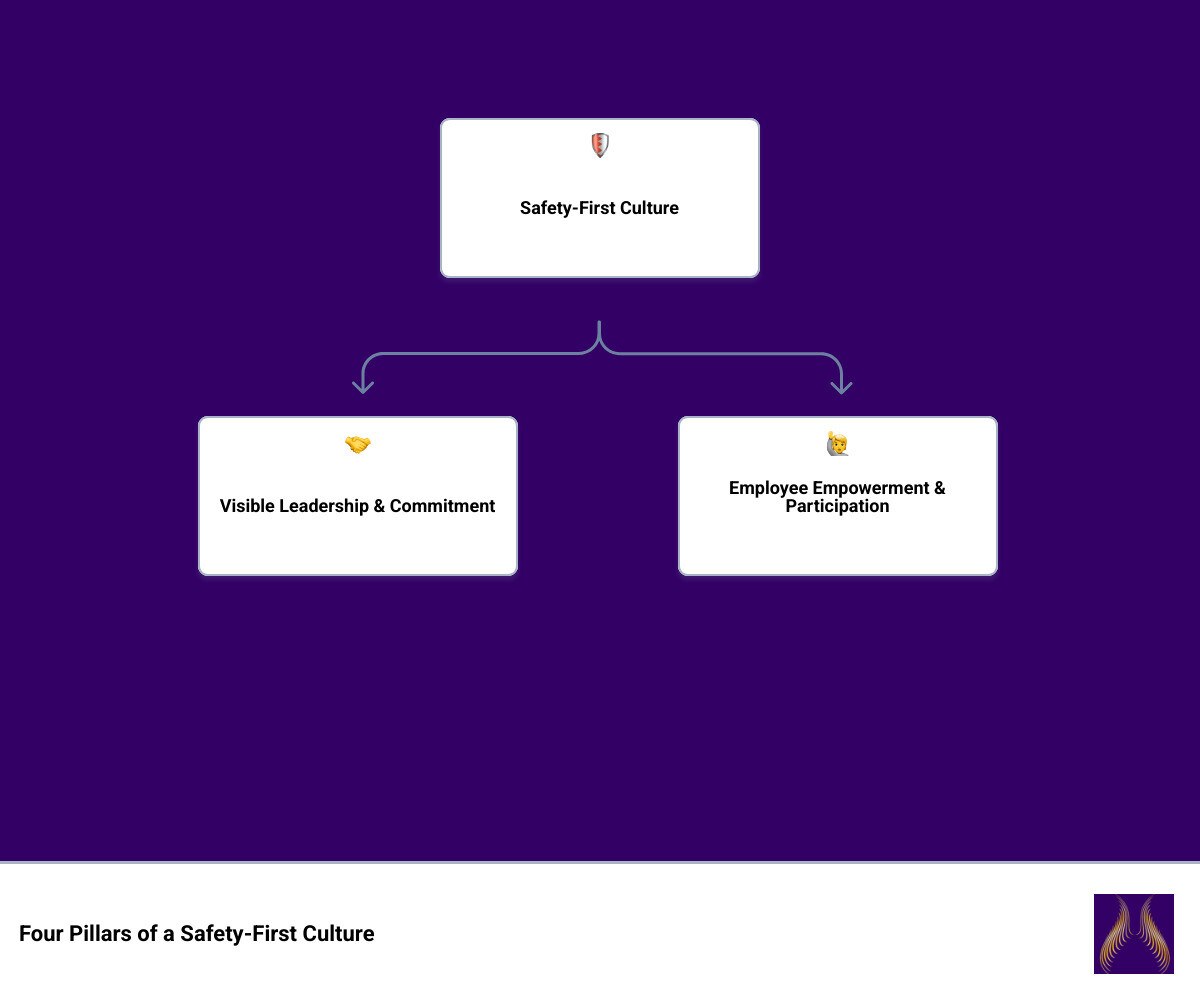
Building a truly resilient safety-first culture is a continuous journey, not a destination. It rests upon four interconnected pillars: visible leadership and commitment, employee empowerment and participation, systematic hazard prevention and control, and continuous improvement and adaptation. These pillars ensure that safety is deeply ingrained in every aspect of our operations.
Pillar 1: Visible Leadership and Commitment
The foundation of any robust safety program is leadership. Leaders must not only state that safety is important but demonstrate it through their actions, making it a core organizational value. This means “walking the talk”—showing up on the job with proper gear, following protocols, and taking the time to discuss safety concerns. As Nick Stavropoulos, a utility safety expert, emphasizes, it’s one thing to say safety is important, but another to make it a core value driven by C-suite leadership.
Leadership commitment also involves allocating necessary resources—both financial and human—to safety initiatives. It means setting clear safety goals, such as a zero recordable incidents target, and communicating these goals effectively. A high ‘say-do ratio,’ where leaders consistently follow through on their promises regarding safety, builds trust and transparency. This visible championship of safety sets the tone for the entire organization, signaling that safety is not negotiable.
Pillar 2: Employee Empowerment and Participation
Why safety first is a shared responsibility is because employees are often closest to the work and therefore have the most accurate understanding of on-site safety conditions. Empowering them with knowledge, skills, and the authority to act is crucial. This includes comprehensive safety training custom to specific job roles and risks. For example, in a surgical setting, this means regular drills and training on specific protocols like fire safety in the operating room or difficult airway management.
Crucially, employees must feel empowered to speak up or even stop work when observing unsafe activities without fear of retaliation. Creating non-punitive and easy reporting mechanisms for safety concerns, such as digital platforms for incident reporting, encourages open communication. Leaders must listen to these insights and follow through on promises, building a responsive culture where workers trust that their input leads to action. This collective contribution and accountability at every level make safety a reality.
Pillar 3: Systematic Hazard Prevention and Control
This pillar focuses on the practical, systematic identification, assessment, and control of hazards. It moves beyond identifying hazards to actively preventing them. Our approach involves:
- Hazard Identification and Assessment: Continuously reviewing hazard information from workers, conducting regular workplace inspections, and investigating incidents to find and correct root causes.
- Hierarchy of Controls: Applying the hierarchy of controls (elimination, substitution, engineering controls, administrative controls, and personal protective equipment) to effectively mitigate risks. We prioritize controls that are the most feasible, effective, and permanent.
- Hazard Control Plan: Developing a comprehensive plan that lists hazards in order of priority, assigns responsibility for implementation, sets target completion dates, and plans for tracking progress.
- Emergency Preparedness: Identifying potential emergencies and developing robust response plans, including an Emergency Action Plan with worker input. This also covers addressing hazards during nonroutine activities.
For a detailed roadmap on establishing a safety program, OSHA provides excellent recommended practices for safety and health programs. We encourage all organizations, regardless of size, to get started with these foundational steps.
Pillar 4: Continuous Improvement and Adaptation
A safety-first culture is never static; it’s a dynamic, ongoing process of continuous improvement and adaptation. This involves:
- Learning from Mistakes: Thoroughly investigating incidents and near misses to understand the root causes, not just the symptoms. Simplistic explanations, such as blaming the worker, are insufficient; a deep understanding is required, and these lessons should be shared across the industry.
- Tracking Performance: Monitoring program performance through both leading (e.g., safety training completion, hazard reports) and lagging (e.g., incident rates) indicators. Performance dashboards and KPIs help us track progress and verify that the program is operating as intended.
- Celebrating Milestones and Reinforcing Safe Practices: Recognizing and rewarding safe behaviors and achievements. A little recognition goes a long way in reinforcing safe practices and motivating continued engagement.
- Leveraging Technology: Utilizing safety management software, like Safetymint, for incident reporting, real-time data visibility, targeted communication, and predictive analytics. Technology can amplify human efforts, facilitating communication, empowering employee participation through digital tools for hazard identification and gamified training modules. Ramesh Nair, the founder of Niyati Technologies, the company behind Safetymint, is a dedicated advocate for workplace safety, firmly believing every individual deserves to return home safely.
This continuous cycle of review, adaptation, and improvement ensures that our safety program remains robust and responsive to new challenges and evolving best practices.
Frequently Asked Questions about Implementing a Safety-First Approach
What are the biggest challenges to creating a safety-first culture?
Creating a safety-first culture, while immensely rewarding, comes with its own set of challenges. One of the primary problems is overcoming resistance to change. This can come from various levels within an organization—employees accustomed to old ways, or management hesitant to invest resources. Balancing productivity pressures with safety initiatives is another common struggle; sometimes, the urgency of a deadline can tempt teams to cut corners. However, as we’ve discussed, true safety improves efficiency in the long run. Securing genuine leadership buy-in, beyond mere lip service, is crucial, as is maintaining momentum over time so that safety doesn’t become a forgotten priority after an initial push.
How do you measure the success of a safety program?
Measuring the success of a safety program requires a balanced approach using both leading and lagging indicators.
- Lagging indicators look backward at incidents that have already occurred, such as injury rates, lost workdays, and workers’ compensation claims. While important for understanding past performance, they don’t predict future safety.
- Leading indicators are proactive measures that predict future safety performance. These include safety training completion rates, the number of hazard identifications reported, safety audit scores, employee participation in safety meetings, and near-miss reporting.
Additionally, employee surveys can gauge safety perception and engagement, while regular audits verify compliance and program effectiveness. For instance, at BodyLuxe, we track meticulous details of every procedure, patient outcome, and facility check to ensure our safety protocols are not just followed, but continuously optimized.
What is the first step a small business can take towards “safety first”?
For a small business, starting on a safety-first journey might seem daunting, but the initial steps are foundational and highly impactful.
- Write a Safety Policy: Start by drafting a clear and concise safety and health policy that outlines your commitment to safety and the responsibilities of both management and employees. Make it accessible to everyone.
- Involve Employees: Engage your team from day one. Ask them about potential hazards they’ve noticed. Their insights are invaluable. This builds ownership and demonstrates that their well-being is a priority.
- Conduct a Basic Hazard Assessment: Walk through your workplace with fresh eyes (and perhaps a checklist) to identify obvious hazards. Think about potential risks specific to your industry. For a small medical practice, this could mean reviewing equipment maintenance, sterilization protocols, and emergency response plans.
- Provide Essential Training: Ensure all employees receive basic safety training relevant to their roles, including emergency procedures and how to report concerns.
These initial steps create a solid foundation upon which a comprehensive safety culture can be built and continuously improved.
Conclusion: Making Safety an Instinct, Not an Afterthought
Why safety first resonates so deeply with us is because it transforms safety from a regulatory obligation into a fundamental aspect of human dignity and business excellence. It’s about cultivating a shared responsibility, where every individual—from the CEO to the newest hire—plays an active role in creating a culture of care. This commitment to safety isn’t just about preventing accidents; it’s about fostering an environment where people feel supported, valued, and empowered to do their best work.
At BodyLuxe, our dedication to a safety-first approach is paramount. It informs every decision we make, from the initial consultation to post-operative care. We believe that exceptional aesthetic results can only be achieved when patient safety is the absolute priority. Our rigorous protocols, surgical expertise, and commitment to local anesthesia procedures are all testaments to this unwavering belief. We continually strive to make safety an instinct, ensuring that every patient who walks through our doors in Chicago experiences the highest standard of care and returns home safely, feeling confident and beautiful.
We invite you to learn more about our commitment to patient safety and our fly-in program at BodyLuxe.